
Watercress
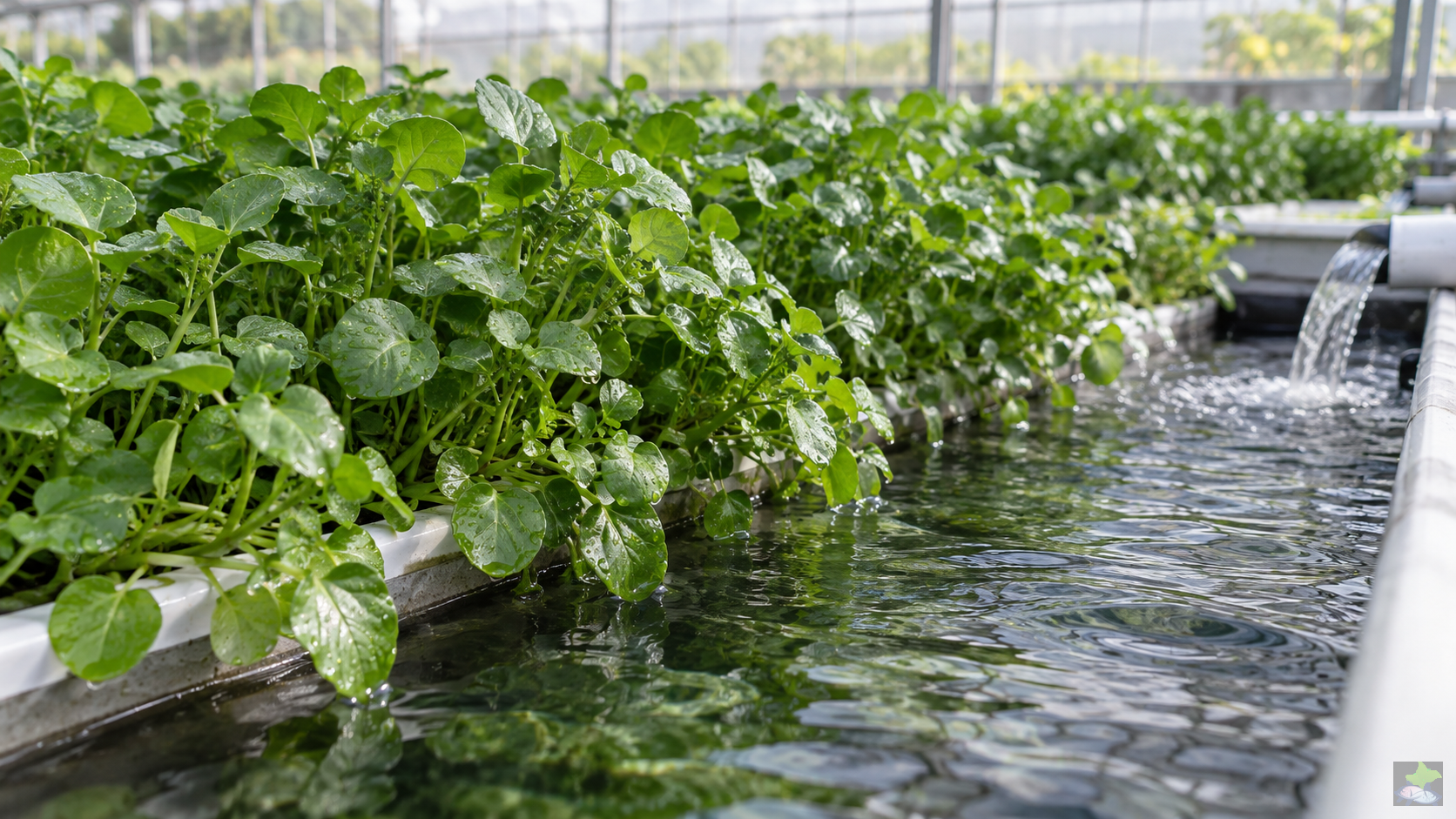
Nasturtium officinale is well suited to hydroponic self-sufficiency in DWC or a hygienically managed flow channel.
Why this crop makes sense
It allows continuous shoot harvesting when strict water hygiene is maintained. The decisive question is not merely whether the plant grows hydroponically, but whether its edible yield, growing period, light requirements, workload and storage life suit the household.
System and root space
DWC or a hygienically managed flow channel is recommended. The root zone must remain evenly moist, well aerated and protected from light. Record the source water and nutrient solution; returns, pipes and reservoirs must remain accessible and easy to clean.
Suitable system pages: Deep Water Culture (DWC) · Flow culture and NFT
pH, EC and climate
A cautious starting range is pH 6.0–7.0 and EC 1.0–1.8 mS/cm at 12–20 °C. These are not universal target values: cultivar, age, light, source water, temperature, measuring method and development stage may require adjustments.
Sowing and crop management
Use drinking-quality water only and follow a documented cleaning process. A small preliminary trial checks germination and system performance. Space plants approximately 15–20 cm apart and regularly inspect root health, leaf colour, pests and uniform water distribution.
Harvesting and storage
Harvest shoot tips repeatedly. Refrigerate them immediately and use promptly. Process only healthy, clean plant parts and follow the food-hygiene requirements of the chosen preservation method.
Troubleshooting
- Tall, soft plants: check light levels, spacing and temperature.
- Leaf-edge damage or chlorosis: check not only EC but also pH, water hardness and nutrient formulation.
- Brown roots: investigate temperature, oxygen supply, hygiene and waterlogging.
- Uneven yields: compare flow rates, emitters, plant spacing and cultivars.