
Aquaponiksysteme · Single Loop
Fully Coupled Aquaponics System
Ein gemeinsamer Wasserkreislauf für Fischhaltung, biologische Aufbereitung und Pflanzenproduktion.
Classify single-loop aquaponics technically
What is a fully coupled aquaponics system?
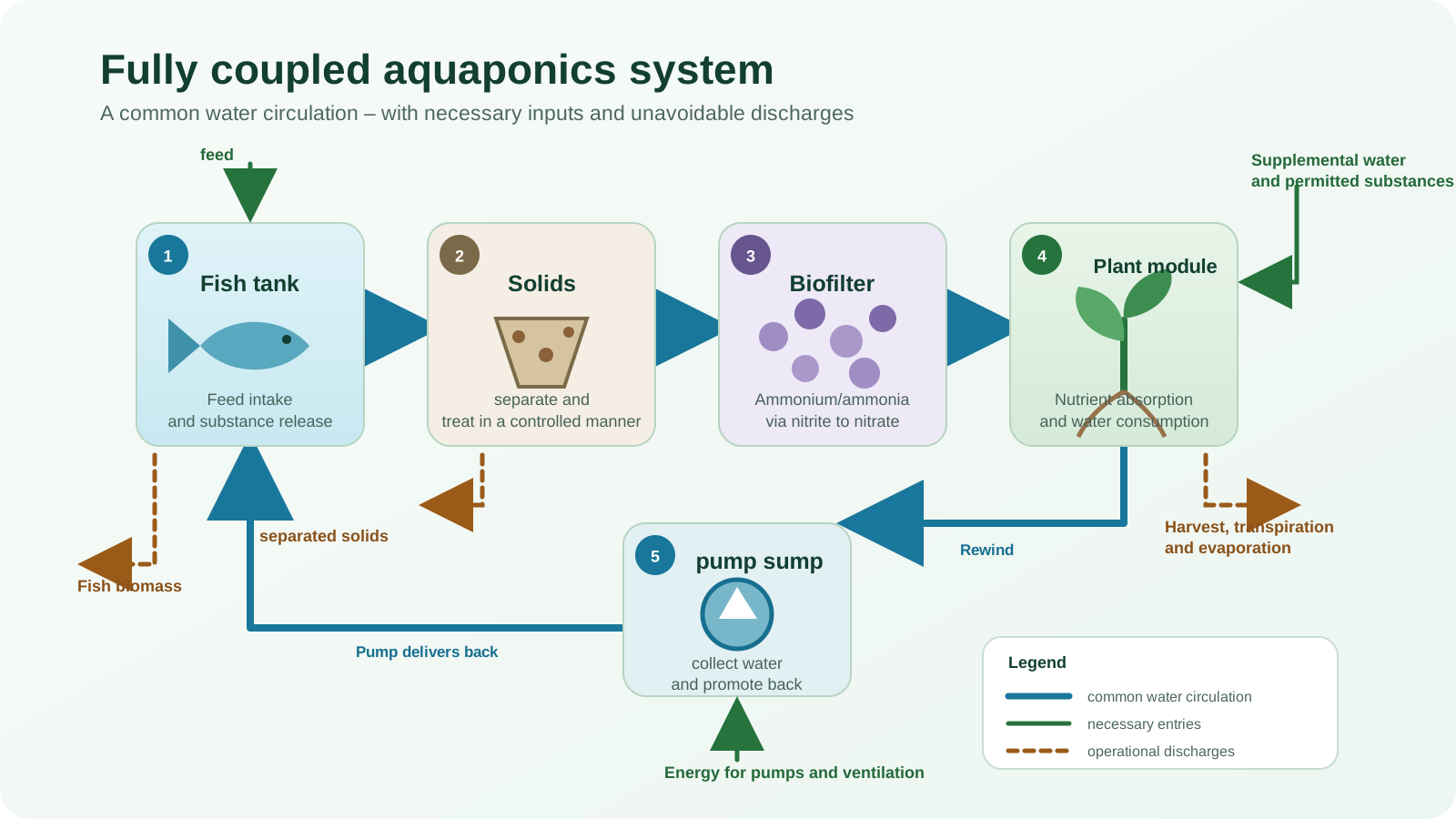
In a fully coupled aquaponics system, fish farming, water treatment and crop production share a common hydraulic circuit. After the necessary treatment, water from the fish area reaches the plants and then flows back into the fish cycle.
This architecture is often referred to as Single loop system, coupled aquaponics or fully recirculating aquaponics referred to. What is important is not the number of basins, pumps or plant modules, but rather the return: changes to water chemistry, temperature or treatment agents can fundamentally affect all hydraulically connected areas.
“Completely coupled” does not mean that every water molecule travels the same route at all times. A system can have branches, bypasses, sump basins, several pump circuits or plant modules with temporary flow. As long as the water from the plant area returns regularly to the common fish cycle and no permanently independently managed nutrient solution is created, the overall architecture remains completely coupled.
This characterizes a single-loop system
- Fish and plant areas use a common water supply.
- The water from the plant modules is returned to the fish area.
- Water parameters must be managed as a common operational compromise.
- Nutrients or treatment agents cannot be dosed independently just for the plant area.
- Hydraulic or water chemical disturbances can affect several system areas at the same time.
That doesn't define the coupling
- the use of a media bed, NFT, DWC or vertical plant module,
- a specific order of all components,
- a fixed system or tank size,
- a certain level of automation,
- the absence of solids separation, biofilters or nutrient supplements.
One circuit, several designs
Possible system configurations within a circuit
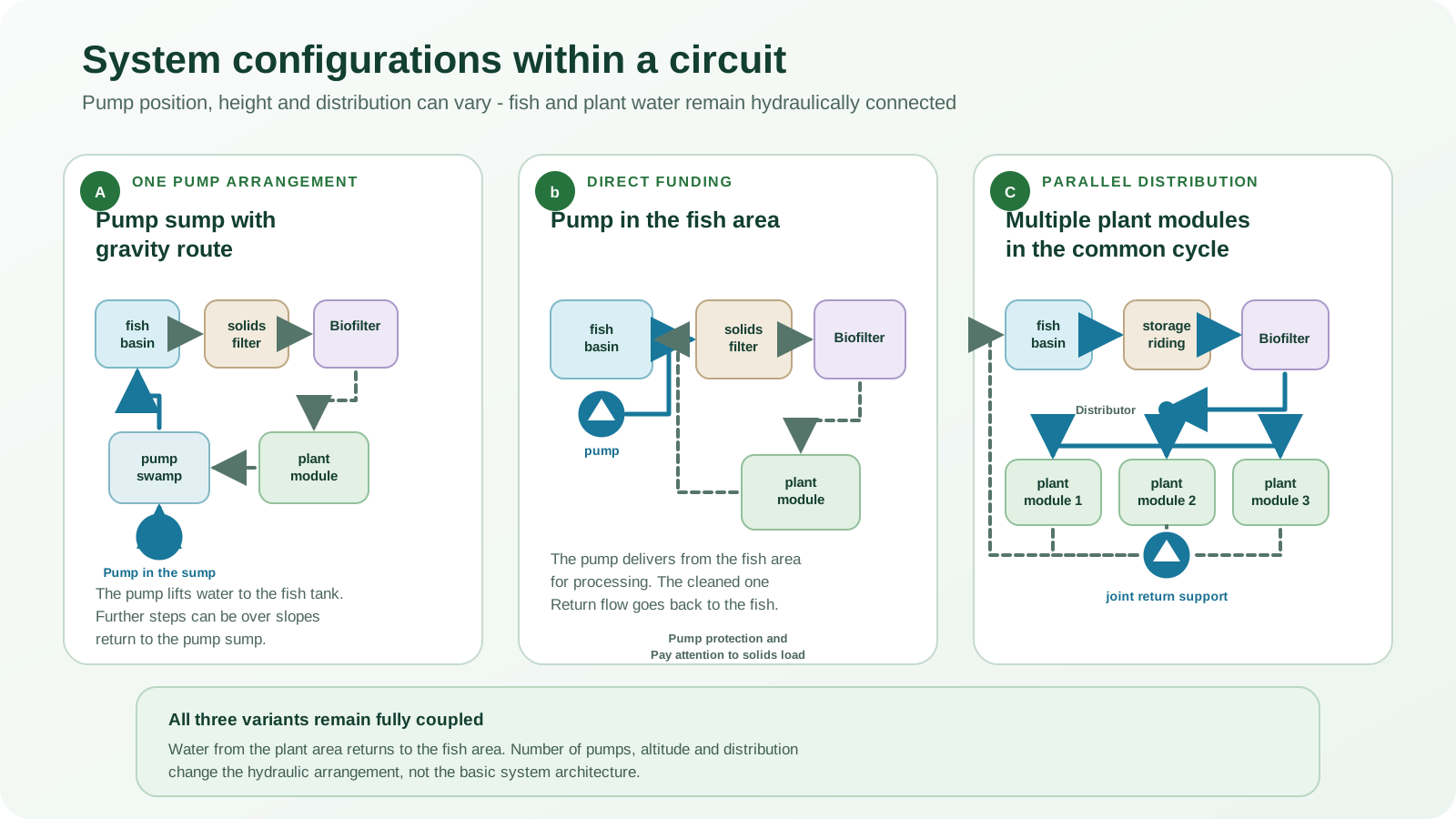
Fully coupled aquaponics is not a single blueprint. Components and waterways are tailored to fish species, feeding, solids load, plant module, location and operational objective.
Configuration 1
Media bed with built-in features
A suitably designed media bed can support plants, provide a colonization area for microorganisms and retain some of the particulate matter. With low to moderate loads, less separate processing technology may be required.
The integrated function is not a license for solids entry. Deposits that are not broken down can clog pore spaces, consume oxygen and promote anaerobic zones. Load, bed structure and maintenance determine whether an additional solid filter or biofilter remains necessary.
Configuration 2
Solids separation and separate biofilter
With NFT, DWC, higher feeding rates or sensitive root areas, the water is usually treated more strongly before the plant module. Settling, vortex, radial flow or drum filters can separate particulate matter; A separate biofilter provides the required colonization area for nitrification.
This separation of processing functions makes maintenance and dimensioning easier. However, it increases the number of components, cables and possible failure points.
Configuration 3
Swamp-based circulation
A sump collects return water from planting and treatment areas. From there, a pump conveys the water back to the fish tank or to a higher distribution point. This allows the water level in the fish tank to be kept largely constant.
The usable sump volume must be able to accommodate operational water level fluctuations, water runoff when the pump is stopped and a safe reserve against running dry.
Configuration 4
Parallel and hybrid plant areas
Several media beds, DWC basins, NFT channels or vertical modules can be supplied in parallel from a common treated water stream. Adjustable branches help to adapt the flow to different hydraulic requirements.
This system also remains fully coupled if all returns enter the same fish cycle. However, additional plant modules increase pump requirements, control effort and the number of potential leakage or blockage points.
Technical basis: System definitions and configuration principles according to Palm et al. as well as Lennard and Goddek.
Circulation does not mean loss-free
Water, solid and nutrient pathway
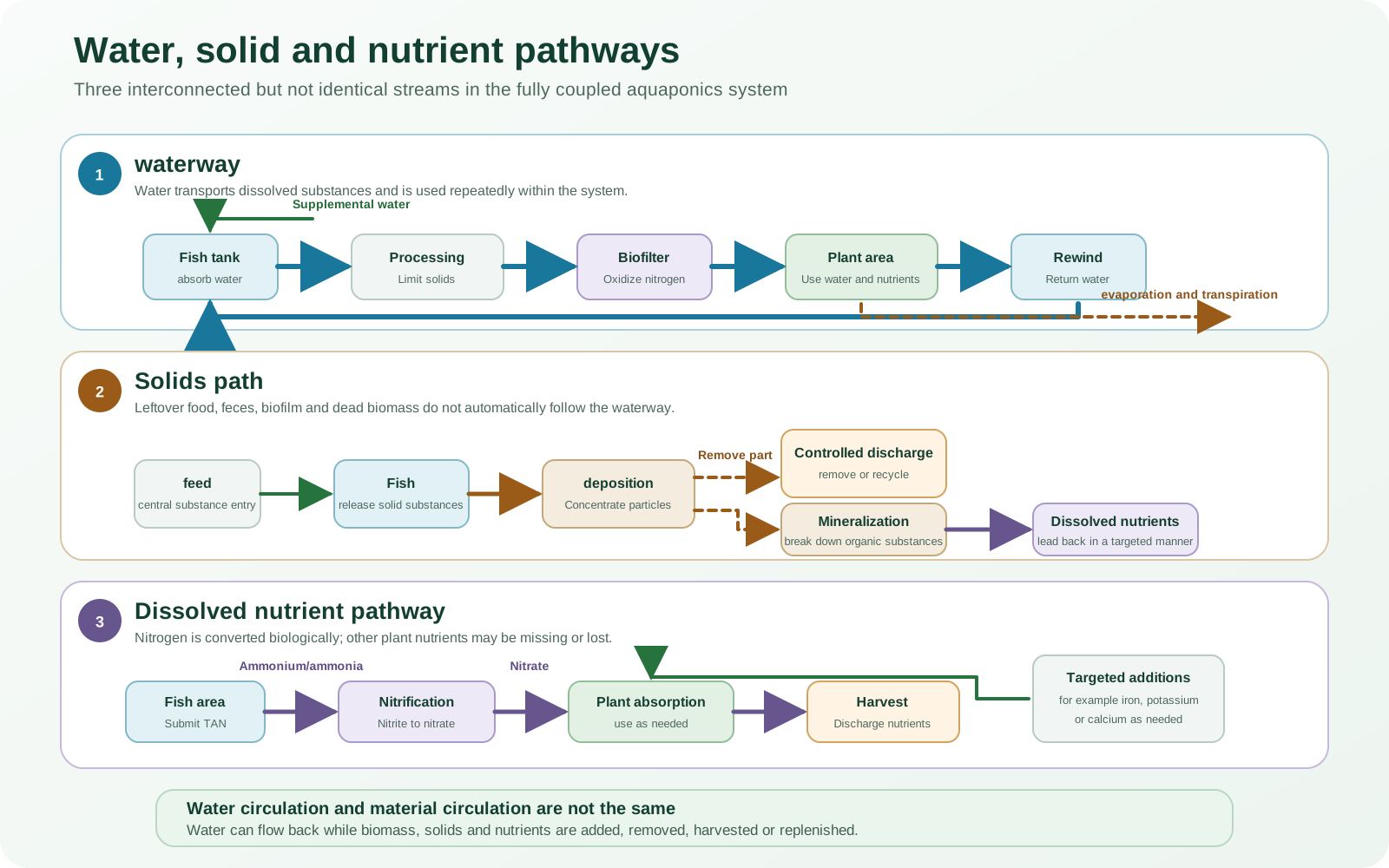
Water circulates within the system. However, substances follow different paths: they are converted, retained, discharged, harvested or are lost from the system in gaseous form or with water losses.
1. Lining as a central material entry
Fish feed is the most important planned nutrient input in most aquaponics systems. Some of the energy and nutrients contained are incorporated into fish biomass. Unassimilated parts end up in the water as dissolved excretions, feces or leftover food.
Feed quantity, composition, digestibility, fish species, water temperature and feeding management therefore influence both fish production and the load on filters and plant areas.
2. Dissolved and particulate substances
Fish release a large proportion of nitrogen into the water through their gills as ammonia or ammonium. Feces and food residues form the particulate fraction. This can contain, among other things, organically bound phosphorus and other plant nutrients.
Dissolved nitrogen compounds are converted biologically. Depending on the system concept, particles must be separated, processed in a controlled manner in the media bed or treated in a separate mineralization.
3. Deposition, mud and mineralization
Solids that are discharged do not disappear from the material balance. If they are disposed of, the nutrients they contain leave the aquaponics cycle. If they are mineralized under controlled conditions, some of the bound elements can be converted back into dissolved and plant-available forms.
Mineralization requires its own process management. Uncontrolled accumulation of solids in the fish tank, biofilter or root area is not a reliable way of recovering nutrients.
4. Plant intake and unavoidable discharges
Plants remove dissolved nutrients from the water and incorporate them into their biomass. These substances leave the system with the harvest. Harvested fish, sludge removal, filter flushing and removed plant residues are also material discharges.
Water is lost primarily through plant transpiration, evaporation, retained crop water, cleaning work, sludge treatment, leaks and, if necessary, water changes. Therefore, make-up water remains necessary even in well-managed circulation systems.
Technical basis: FAO Technical Paper 589, Lennard and Goddek and the review on nutrient recovery by Nishanth et al.
Ensuring biological water treatment
Biofilter and nitrification
The biofilter does not protect the fish through the mere presence of a filter container. What is crucial is a sufficiently large biofilm surface that is supplied with oxygen and water and whose microbial community can process the actual nitrogen load.
Step 1
TAN and the toxic NH3-Share
Measuring devices and test kits often record all ammonia nitrogen as a TAN. This includes the ionized form NH4+ and the uncharged form NH3. A TAN value alone is not sufficient for risk assessment.
With increasing pH and temperature, the proportion of NH, which is more toxic to fish, decreases3 to. Fish species, developmental stage, duration of exposure, oxygen supply and other water parameters also influence the actual risk.
Step 2
Ammonia oxidation
Ammonia-oxidizing microorganisms obtain energy from the oxidation of reduced nitrogen compounds and thereby form nitrite. In simplified representations the genus is often used Nitrosomonas called; however, real biofilters contain diverse microbial communities.
Nitrite is also critical for fish. An increase during the run-in phase or after a change in load shows that formation and further oxidation are not yet sufficiently coordinated.
Step 3
Nitrite oxidation
Nitrite-oxidizing microorganisms convert nitrite to nitrate. In addition to the traditionally frequently mentioned genus Nitrobacter can in particular Nitrospira and other organisms play an important role.
In normal aquaponics operations, nitrate is significantly less acutely toxic to fish than NH3 or nitrite and can be used by plants as a source of nitrogen. However, it is not a universally harmless substance; Concentration, fish species, duration of exposure and overall water quality remain relevant.
What determines the biofilter performance
- daily feed input and the resulting TAN load,
- effective biofilm surface and properties of the filter medium,
- water flow and uniform flow,
- sufficient supply of dissolved oxygen,
- temperature and pH range,
- available alkalinity for acid-forming nitrification,
- organic pollution and upstream solids treatment,
- Age, stability and adaptation of the microbial community.
Why a fixed break-in period is not enough
The development of a resilient biofilter takes time, but cannot be confirmed by a fixed number of weeks alone. Temperature, pH, oxygen, alkalinity, starting culture, available surface area and nitrogen supply influence the process.
Resilience is only proven when a defined feed or ammonium load is processed and TAN and nitrite remain within the intended operating range. After stock increases, feed changes, cleaning errors, use of medication or longer pump failures, the biofilter performance must be re-evaluated.
Technical basis: FAO Technical Paper 589, NMSU, Oklahoma State University, U.S. EPA and the microbiological study by Wongkiew et al.
Biological load instead of container percentage
Interpretation of feed rate and biological load
The size of a fully coupled aquaponic system cannot be reliably derived from a fixed ratio of fish tank, filter volume and plant area. The starting point is the biological load, which arises primarily from fish biomass, feed input and feed composition.
Planning step 1
Determine fish species and production target
Fish species, stock size, desired final weight, growth period and water temperature determine how much feed is consumed and what oxygen requirement is to be expected. A stock of juvenile fish behaves differently than the same stock just before harvest.
The planning must take into account not only the starting stocking, but also the highest planned biomass and the highest realistic daily amount of feed.
Planning step 2
Determine daily feed intake
The amount of feed combines fish production, nitrogen load, solids accumulation and potential nutrient supply to the plants. It must be derived from the fish species, body size, temperature, food recommendation, health status and actual food intake.
A feeding rate as a percentage of fish biomass is only a baseline. It is adjusted on the farm to growth, residual feed, water quality and seasonal changes.
Planning step 3
Estimate TAN and solids load
Protein content, digestibility and fish metabolism influence nitrogen excretion. Unused feed components and feces determine the particulate load. Therefore, two feedstuffs with the same daily amount can cause different requirements for biofilters and solids treatment.
For a reliable design, manufacturer data, species-specific production data or a documented calculation model are used. Safety margins do not replace later measurements in real operation.
Planning step 4
Lay out biofilter and oxygen supply
The biofilter must be able to process the expected TAN load under the intended temperature, pH and oxygen conditions. The nominal surface of a filter medium can only be used if it flows evenly and is sufficiently supplied with oxygen.
Aeration is planned for fish, biofilters and plant roots. Emergency ventilation and reserve capacity must cover the most critical operating condition, not just an unloaded test run.
Planning step 5
Allocate plant area and crop requirements
The plant area is not derived from the tank volume alone. Leafy vegetables, herbs and fruit crops differ in terms of nutrient absorption, standing time, planting density and seasonal requirements. Light, temperature, harvest stage and available forms of nutrients also alter absorption.
A system can at times produce more nitrate than the current planting absorbs, and at other times show individual nutrient deficiencies despite the same fish biomass.
Planning step 6
Check hydraulics and operating reserve
Pumps, piping, sumps, overflows and returns must handle the planned flow without running dry, backing up or uncontrolled water level changes. Contamination and increasing flow resistance must be included in the reserve.
The highest theoretical delivery rate is not automatically the best operating point. The decisive factors are the actually measured flow in the installed system and the reliable function with partially dirty components.
At least document for interpretation
- Fish species, size classes and maximum target biomass,
- Feed type, protein content and maximum daily ration,
- expected TAN and solids freight,
- Biofilter medium, effective surface and design conditions,
- oxygen demand and available ventilation reserve,
- real pump throughput at system height and pipe resistance,
- Plant species, planting densities and seasonal occupancy,
- sump, overflow and return reserve,
- Limit values for stocking, feed or plant expansions.
Technical basis: FAO Technical Paper 589 and Lennard and Goddek. Specified feed rate ratios are always tied to the experimental system and reference conditions.
Shared water forces shared decisions
Operational goal conflicts
The shared circuit is the strength and at the same time the central limit of this system architecture. A change in favor of one area of production may worsen conditions in another area.
pH: availability, nitrification and fish tolerance
Plants absorb many nutrients particularly well in a slightly acidic area. Nitrifying microorganisms often reach their highest activity at higher pH values. Fish have species-specific tolerance and preference ranges.
A frequently used range around pH 6.8 to 7.0 is therefore an operational compromise, not a universal optimum. Water source, alkalinity, fish species, crop production, biofilter and measurement accuracy determine which range is viable in a specific facility.
Temperature: Species must fit together
Warm-water fish like tilapia cannot be easily combined with plants that require permanently cool root zones. Conversely, trout place high demands on low temperatures and oxygen supply, while some heat-loving crops grow slowly under these conditions.
The species combination is therefore determined before the technical dimensioning. A common circuit cannot independently compensate for strong thermal differences.
Oxygen: several consumers, one reserve
Fish, plant roots, nitrifiers and heterotrophic microorganisms consume oxygen. High temperatures, heavy feeding, organic pollution and nocturnal plant respiration can simultaneously increase requirements.
A measurement in just one convenient location does not necessarily describe the entire system. Critical areas and unfavorable times of day must be included in the monitoring.
Nutrients: Fish safety limits plant optimization
A hydroponic nutrient solution can be specifically adapted to the culture and development phase. In the fully coupled system, however, supplements go back to the fish and biofilter. The concentration, accompanying ions, purity and dosing speed must therefore remain compatible with fish and microbes.
Higher electrical conductivity does not automatically mean better nutrient supply and can increase the stress on fish.
Treatments: an area cannot be isolated
Medicines, pesticides, disinfectants or significantly changed pH values can have undesirable effects on other organisms and the biofilter. A measure that is common in pure aquaculture or hydroponics is therefore not automatically suitable for aquaponics.
Before each treatment, the target organism, active ingredient, return route, waiting time, food law and effects on fish, plants and microorganisms must be checked.
High coupling: efficient use, shared interference
The shared water supply can make water and dissolved nutrients usable multiple times. At the same time, pump failure, lack of oxygen, incorrect dosage or a hydraulic blockage can affect several production areas at the same time.
The closer the coupling, the more important monitoring, alarming, emergency operation and clear intervention limits become.
Technical basis: Monsees, Kloas and Wuertz; Aslanidou et al.; Oklahoma State University and Palm et al.
Add according to findings, not assumptions
Nutrient management and acceptable supplements
Fish food provides many plant nutrients, but not necessarily in the required quantity, form or ratio. A coupled system can therefore develop visible or analytically detectable plant deficiencies despite stable fish water values.
First determine the cause
Leaf color, growth habit and yield provide clues, but alone are not enough for a reliable diagnosis. Similar symptoms can arise from nutrient deficiencies, improper pH, root damage, lack of oxygen, salt exposure, temperature stress, or disease.
Before supplementation, at least pH, temperature, oxygen, alkalinity, electrical conductivity and relevant nutrients are assessed. Plant or water analysis may be necessary for recurring problems.
Mineralize solids in a controlled manner
Some phosphorus and other elements are in the particulate fraction. Controlled mineralization can partially recover bound nutrients. Oxygen supply, residence time, solids concentration and return must be managed in a targeted manner.
Rotting deposits in the plant module are not proper mineralization and can deplete oxygen or produce unwanted metabolic products.
potassium and calcium
Potassium and calcium can become scarce depending on feed, water source, plant species and crop intensity. Bases containing potassium or calcium can help correct pH and alkalinity if needed at the same time.
The resources are not combined indiscriminately. Additions that are too rapid or excessive alter pH, ionic composition and conductivity. Changes, doses and target values must be documented.
Iron
Iron deficiency often occurs in aquaponics because the total amount can be small or iron does not remain sufficiently available to plants in the existing pH and redox range. A suitable iron chelate can improve availability.
The choice of chelate depends on the actual pH range. Dosing without measurement or documented target size can lead to unnecessary enrichment.
Trace elements and accompanying ions
Hydroponic complete fertilizers are not automatically suitable for the fish cycle. Copper, boron and other trace elements have small ranges between deficiency, sufficient supply and possible toxicity. Sodium or chloride can also accumulate with repeated additions.
Only products with a known composition, suitable purity and traceable dosage are used.
Foliar application as a limited option
Certain nutrients can be foliar supplemented under appropriate conditions. Spray mist and run-off solution must not enter the fish cycle in an uncontrolled manner.
Concentration, culture compatibility, application temperature, residues and food safety must be taken into account. Foliar fertilization does not replace root cause analysis.
No addition without safety check
- Know product composition and accompanying ions.
- Calculate dose from measured value and water volume.
- Check fish and biofilter compatibility.
- dose in small, controlled steps.
- Observe pH, conductivity, fish behavior and plant response.
- Document each addition with date, product, batch and quantity.
Technical basis: Aslanidou et al., Nishanth et al., Lennard and Goddek and FAO Technical Paper 589.
Measured values need type, unit and reference form
Water quality and species-specific target areas
A table with a single “optimal aquaponic value” is technically misleading. Target and intervention areas are derived from fish species, size class, crop production, biofilter, temperature and operational safety strategy.
Consider pH and alkalinity together
The pH influences nutrient availability, nitrification and the proportion of the more toxic NH3. Alkalinity describes an important part of acid buffering. A seemingly suitable pH can quickly collapse when the buffer capacity is exhausted.
Temperature controls multiple processes
Temperature affects fish metabolism, feed intake, plant growth, microbial activity and oxygen solubility. That's why it's not just selected based on plant needs or just fish growth.
Measure oxygen at critical points
Dissolved oxygen is evaluated in the fish tank, before or after heavily loaded filters and, if necessary, in the root area. The worst time of day can be more meaningful than a single measurement in the afternoon.
TAN and NH3 differentiate
TAN includes NH4+ and N.H3. For the risk assessment, the NH must3-Proportion can be determined or calculated taking pH and temperature into account. The same TAN value can therefore represent a different risk under different conditions.
Evaluate nitrite on a species-specific basis
Nitrite impairs oxygen transport in fish. The sensitivity and possible protective effects of chloride differ depending on the fish species and water chemistry. A rising trend requires root cause analysis, not just a one-time countermeasure.
Specify nitrate with a clear reference form
Results can be seen as nitrate ion NO3− or as nitrate nitrogen NO3-N can be specified. These values are not identical. Each table and each target area must explicitly state the unit and reference form.
Orientation for selected fish groups
The following areas serve to pre-select compatible species. Reliable species-specific production data, local husbandry requirements and the conditions of the strain used apply to the specific facility.
| group of fish | Temperature orientation | Oxygen orientation | Importance for plant choice |
|---|---|---|---|
| Tilapia and other warm water fish | often around 25-30°C for good growth; Check species and strain specific | ensure a consistently high level of supply; Values around or above 4 mg/L are only a low-level guide | Choose heat-tolerant plants and adequately ventilated root areas |
| Carp-like warm to transitional water fish | broad species-specific range; Do not derive production optimum from tolerance range | Plan safety reserves for high biomass, feeding and warm periods | Select cultures based on actual water temperature |
| Trout-like cold-water fish | often around 12–18 °C; Pay attention to the type and production goal | high demand; usually aim for over 6 mg/l and take temperature dependence into account | Cooler leafy crops are usually more compatible than heat-loving fruit crops |
Frequently or continuously
- temperature,
- dissolved oxygen,
- water level and pump function,
- Fish behavior and feed intake,
- visible flow and unusual noises.
Regularly and after changes in load
- pH and alkalinity,
- TAN and calculated NH3-share,
- Nitrite and nitrate with a clear reference form,
- electrical conductivity as a trend parameter,
- Plant symptoms, root condition and pest control.
Additionally depending on the occasion
- Potassium, calcium, iron and other nutrients,
- Hardness, sodium, chloride or problematic substances in the water source,
- microbiological investigations for biosafety issues,
- Flow measurement instead of just the pump's nominal power,
- Laboratory analysis for recurring unexplained problems.
Subject knowledge: NMSU, Oklahoma State University, U.S. EPA, the Australia-New Zealand Water Quality Guidelines and FAO Technical Paper 589.
Secure operations
Incidents, biosecurity and redundancy
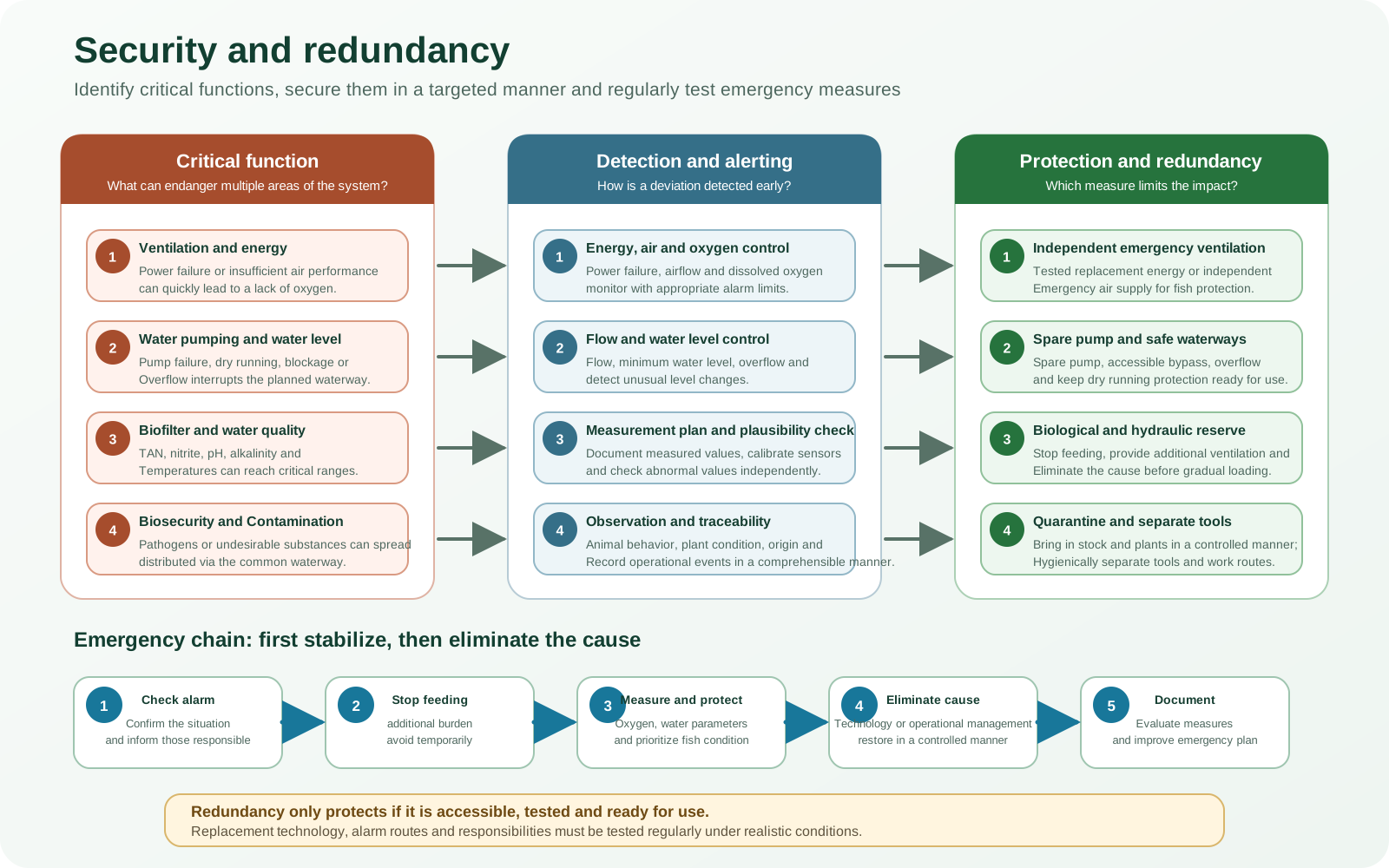
In a fully coupled aquaponic system, technical or biological disturbances can affect multiple areas of the system via the common water route. A resilient operating concept must therefore take into account not only normal operation, but also power failures, pump shutdowns, lack of oxygen, filter problems and illnesses.
Power and pump failure
If water pumping fails, solids are no longer reliably transported away and biofilters and plant modules are no longer flowed through as planned. A ventilation failure can be even more time-critical. Fish biomass, water temperature, oxygen consumption and available water volume determine how quickly a critical state is reached.
Alarming, emergency ventilation and a defined reaction by the operator are therefore more important than a general indication of the permissible downtime.
Lack of oxygen
Fish, plant roots and aerobic microorganisms consume oxygen. High temperatures, heavy feeding, lots of organic matter, or insufficient water movement can reduce oxygen reserves.
If there is an acute lack of oxygen, ventilation and fish protection take priority. Feeding is suspended, the cause is looked for and the resumption of operation is decided based on measured values.
Clogging and hydraulic deviation
Solids, biofilms, roots or foreign objects can restrict pipes, drains and manifolds. As a result, individual filter or plant areas receive too little water, even though the main pump continues to run.
Controllable distributors, accessible cleaning points, overflows and visible flow controls facilitate early detection.
Ammonia or nitrite increase
An increase can arise, among other things, from overfeeding, dead biomass, insufficient biofilter performance, lack of oxygen or stock build-up too quickly. The evaluation must take pH value, temperature, oxygen and fish species into account.
The response may include stopping feeding, removal of organic loads, additional aeration and controlled water exchange. Measures are chosen based on the actual cause.
pH and alkalinity drop
Nitrification consumes alkalinity and can gradually lower pH. Without regular monitoring, buffer capacity can decrease to such an extent that rapid pH changes and impairment of biofilter performance become more likely.
Corrections are made gradually, documented and with substances suitable for the intended aquaculture and plant operation.
disease or contamination
As water circulates between areas, water-borne pathogens or unwanted substances can be spread. Not every disease is transmitted via water, but the common circulation makes complete hydraulic isolation of individual areas difficult.
Quarantine, controlled origin of stock and plants, separate tools and regulated access and hygiene procedures reduce the risk of entry.
Plan redundancy based on actual risk
Redundancy does not mean installing every component twice without checking. First, it is assessed which function directly endangers fish welfare, biofilter or system integrity in the event of a failure. Replacement, bridging or a quick manual response are provided for these functions.
| Critical function | Possible insurance | To be checked regularly |
|---|---|---|
| Ventilation | Independent emergency air pump, oxygen reserve or emergency power supply | Start function, air capacity, check valves and energy source |
| Water pumping | Replacement pump, pump that can be switched in parallel or prepared replacement | Flow rate, contamination, spare parts availability and switching |
| water level | Emergency overflow, dry running protection and low water warning | Sensor function, free processes and plausible switching point |
| Temperature | Alarm limits, shading, ventilation and safe heating or cooling strategy | Measurement comparison, seasonal power reserve and energy supply |
| Measurement | Second measurement or suitable control method | Calibration, reagent shelf life and documentation |
Evaluate realistically
Advantages and limitations
A fully coupled system is neither inherently the best nor the worst aquaponics architecture. Its suitability depends on the production goal, scale, choice of species, available technology and the skills of the operator.
Possible benefits
- Direct shared waterway: The fish, filter and plant areas work hydraulically in a continuous circuit.
- Comparatively clear basic architecture: Small systems can get by with fewer separate storage and transfer stages.
- Multiple water use: Treated water is reused in the system before replacing operational losses.
- Use of part of the nutrient flows: Plants can absorb nitrate and other available nutrients from fish.
- Suitable for teaching and demonstration: Waterways, nitrification and plant nutrient uptake can be clearly linked.
- Tried and tested basic form: Many small-scale aquaponics systems rely on a fully coupled cycle.
Essential boundaries
- Common compromise area: Temperature, pH value and water composition must be sustainable for fish, microorganisms and plants at the same time.
- Hydraulic dependency: Disturbances can impact multiple functional areas through the common waterway.
- Limited Separate Control: Fish and plant production can be optimized less independently than in more decoupled architectures.
- Nutrient gaps remain possible: Fish feed does not automatically provide plant nutrients in the quantities and ratios required.
- Solids management remains necessary: Reuse of water does not replace solids separation, controlled mineralization or discharge.
- No self-sufficient operation: Feed, energy, oxygenation, supplemental water, control and maintenance remain required.
Choose suitable architecture
Suitability and selection aid
The decision for a fully coupled system should not depend solely on low construction costs or a simple schematic sketch. What is crucial is whether joint management fits the production goal and the support available.
Often well suited
- small to medium-sized learning, demonstration and research facilities;
- Pilot plants with clearly defined production goals;
- Systems with matching temperature requirements of fish and plants;
- Companies that plan fish feeding, planting areas and biofilters together;
- Systems with continuous measurement, maintenance and documented operational management;
- Projects in which a clear hydraulic architecture is more important than largely independent process optimization.
Check more closely or compare other architecture
- widely varying temperature or pH requirements of target species;
- very different production cycles of fish and plant areas;
- high need for precise plant-specific nutrient control;
- necessary hydraulic isolation of individual production areas;
- strongly fluctuating fish biomass or feed rate with constant crop production;
- commercial systems where failures in one area are not allowed to spread to other areas.
Questions before making a system decision
- Do the temperature requirements of fish species and crop productions match?
- Can the plant area be adapted to the planned feed rate and its development over time?
- How are solids separated, treated, mineralized or discharged?
- Which water parameters are measured and with what frequency?
- Which supplements are intended and how is their effect on fish and biofilters tested?
- Which functions require alarms, backup technology or emergency energy?
- Who can respond to a critical alarm within the required time?
- Is a later expansion possible without uncontrollably changing the flow and biofilter performance?
Separate terms clearly
Connect to media bed, NFT, DWC and vertical plant modules
“Fully coupled” describes the system architecture and thus the hydraulic connection between the fish, processing and plant areas. Media bed, NFT, DWC and vertical systems, on the other hand, describe the construction and operation of the plant-side cultivation module.
Plant module
Media bed
Plants grow in a solid, preferably suitable substrate. Depending on the design, the bed is periodically flooded or flowed through continuously. Solids load, oxygen supply and cleanability must match the overall system.
Detailed specialist page follows under “Hydroponics / Systems / Media Bed”.
Plant module
NFT
With the Nutrient Film Technique, a thin film of water flows through slightly inclined plant channels. Roots, manifolds and drains are sensitive to solids, uneven flow and pump failures.
Detailed technical page follows under “Hydroponics / Systems / NFT”.
Plant module
DWC
In deep water culture, the plants are usually on floating or supported plates above a larger volume of water. Root aeration, water distribution and limiting solids input are central planning tasks.
Detailed specialist page follows under “Hydroponics / Systems / DWC”.
Plant module
Vertical systems
Vertical towers or stacked modules take advantage of height, but have special requirements for even water distribution, pressure, return, accessibility and light supply.
Detailed specialist page follows under “Hydroponics / Systems / Vertical Systems”.
Compare all five system architectures
Does this aquaponics system fit your system?
Compare the water flow, controllability, technical complexity and typical operating conditions of all five system architectures.
Compare all five aquaponics systemsComprehensible basics
Specialist sources
The technical classification is based on specialist literature on aquaponics, recirculation systems, nitrification, nutrient management, plant modules and biosecurity. Specific system values must also be adapted to fish species, culture, water source, climate and legal requirements.
- Somerville, C.; Cohen, M.; Pantanella, E.; Stankus, A.; Lovatelli, A.: Small-scale aquaponic food production – Integrated fish and plant farming. FAO Fisheries and Aquaculture Technical Paper No. 589, 2014.
- Goddek, S. et al.: Navigating towards Decoupled Aquaponic Systems: A System Dynamics Design Approach. Water, 2016.
- Lennard, W.; Goddek, S.: Aquaponics: The Basics. In: Aquaponics Food Production Systems, 2019.
- Monsees, H. et al.: Potential of aquacultural sludge treatment for aquaponics. PLOS ONE, 2017.
- Aslanidou, M. et al.: Nutrient Use Efficiency and Nutrient Recovery in Aquaponics. Horticulturae, 2023.
- Nishanth, D. et al.: Current technologies for nutrient recovery in aquaponic systems. Frontiers in Sustainable Food Systems, 2025.
- Pinho, S.M. et al.: Emergy evaluation and pathogen-related considerations in aquaponic production. Aquaculture, 2019.
- Folorunso, E.A. et al.: Exploring the potential of aquaponics systems in mitigating climate change effects on food security. Reviews in Aquaculture, 2021.
- New Mexico State University: Aquaponics: A Guide to Setting Up a System. Cooperative Extension Service.
- Palm, H.W. et al.: Aquaponics production systems: combined aquaculture and hydroponic production technologies. Reviews in Aquaculture, 2024.