
Microgreens anbauen
Soilless Hydroponic Systems for Microgreens
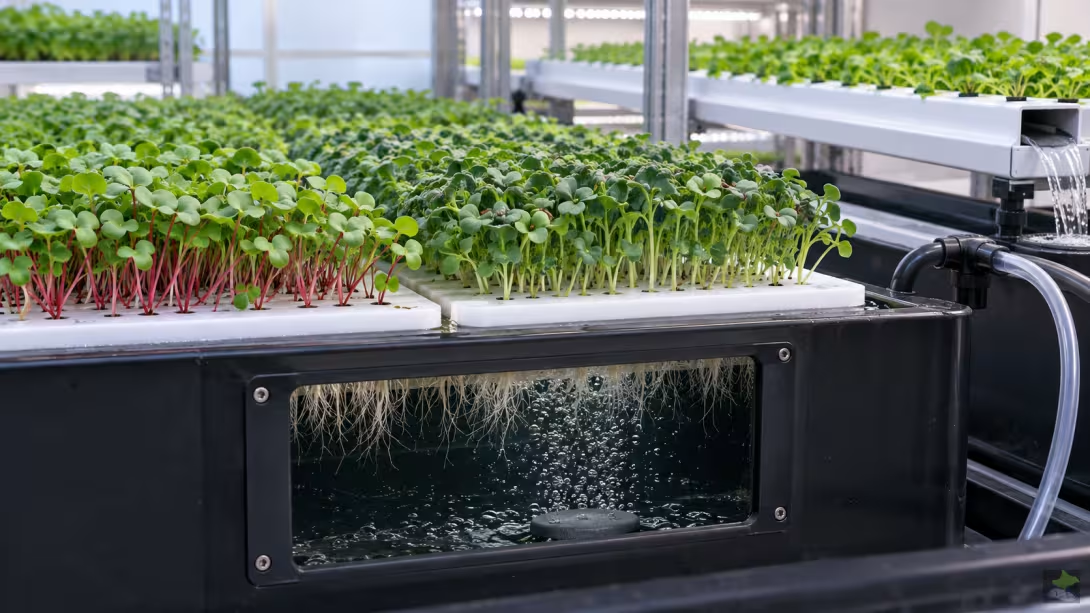
Hydroponic systems supply the roots without a loose growing substrate. Depending on the technique, seeds rest on a thin support while the roots grow into an aerated solution, are wetted by a shallow nutrient film or are sprayed inside a dark chamber. This saves substrate, but increases reliance on equipment, cleaning and measurement.
DWC and floating rafts
In deep water culture, opaque panels or inserts support the young plants above a water reservoir. The roots reach into the aerated solution. DWC can be scaled in modules and buffers short-term fluctuations in water temperature. Excluding light is important because illuminated nutrient solution encourages algae. Oxygen supply, water level, temperature, pH and electrical conductivity are checked regularly.
Adapted NFT systems
Conventional NFT channels were developed for plants with established root balls. For microgreens, the germination phase therefore requires a moist support and a particularly even, very shallow film. Dry areas, an uneven gradient or interrupted flow quickly affect densely sown crops. Each variety should be tested in the specific channel profile before the system is expanded.
Aeroponics
In aeroponic systems, the roots hang inside a dark chamber and are wetted at short intervals tailored to the installation. The high oxygen supply is an advantage, but nozzles, filters, pumps and controls are critical points of failure. There is no universal spraying interval: the root chamber, nozzle technology, climate and stage of development determine the cycle. Alarms and reliable emergency irrigation are essential in professional operations.
Operating routine
- Document the water quality and initial readings.
- Cover all water surfaces exposed to light.
- Monitor pH, EC, temperature and dissolved oxygen according to the system.
- Check filters, pumps and flow every day.
- Between crop cycles, clean tanks, channels and supports according to a validated hygiene plan.