Freshly Harvested: Cooking with Vegetables and Herbs
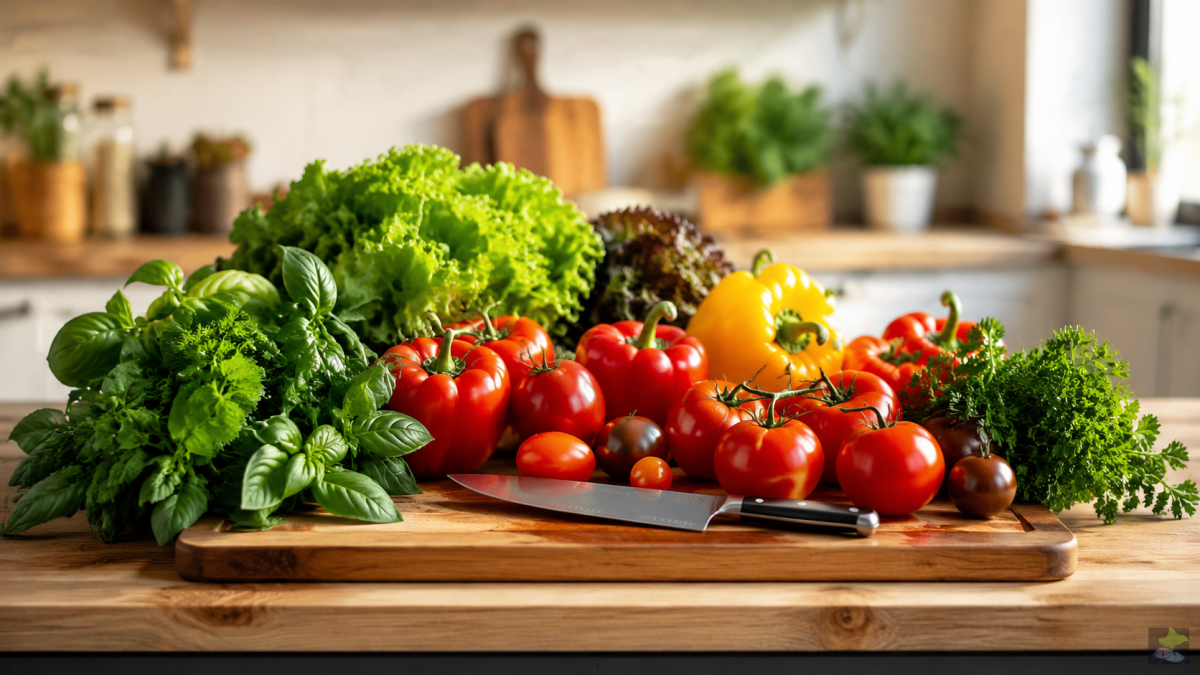
Freshly harvested vegetables and aromatic herbs rarely need complicated recipes. What matters is preserving their quality from plot to plate: harvest at the right time, work cleanly, store appropriately and process them only as much as flavour and texture require. This guide connects harvests from aquaponics, hydroponics and the garden with flexible everyday cooking.
Kitchen principle: First look at, smell and taste the harvest—then plan the dish. The vegetables should not have to fit a rigid recipe; preparation should suit their actual quality and quantity.
Freshness Is More Than a Short Journey
Freshly harvested does not automatically mean ready for the kitchen. Ripeness, time of day, water supply, temperature and the time until processing affect firmness, flavour and shelf life. A lettuce cut in intense midday heat and left warm may wilt faster than carefully chilled produce that has travelled a little farther.
The main advantage of harvesting your own produce is control: you determine the timing, quantity and processing. Delicate leaves can be used immediately, while robust vegetables can be stored purposefully. This reduces quality losses and prevents harvesting more than can reasonably be used.
Harvest only as much as you need
Many plants keep better on the plant than after being cut and brought into the kitchen. Harvest according to the planned dish rather than the maximum possible volume. With cut-and-come-again lettuce, chard, herbs and some brassicas, individual outer leaves can often be removed while leaving the growing point intact.
Simple weekly planning helps: what will be eaten raw today, cooked within a few days, or frozen or otherwise preserved? Each group has different requirements. An unplanned large harvest, by contrast, creates time pressure and quickly leads to overcrowded refrigerator compartments.
Recognise the Right Time to Harvest
Leafy vegetables and lettuces
Leaves should have the colour typical of the cultivar, feel firm and be free from slimy or rotting areas. Young leaves are often more tender; older ones are stronger and sometimes more bitter. Water status is often better after cool night-time hours or in the morning than during the heat of the day. Wet plants should nevertheless be allowed to dry at the surface before prolonged storage.
Fruiting vegetables
Harvest tomatoes, cucumbers, peppers and courgettes according to the desired ripeness and use. Small courgettes are generally more tender; fully coloured tomatoes more aromatic but more susceptible to pressure damage. Separate damaged fruit and use it first. Unusual discolouration or unexpected bitterness must not simply be masked with seasoning.
Herbs
Cut herbs with clean, sharp scissors without crushing the plant unnecessarily. Flavour depends on the species, developmental stage and site. Flowering shoots are not inherently worthless, but may taste different and have a firmer texture. Harvest small samples and compare them.
From Harvest to a Clean Work Surface
Do not place harvest containers directly on an already cleaned work surface if they have previously stood on soil, the ground or greenhouse paths. Separate an unclean area for receiving and initial sorting from the clean area used for cutting and plating. Remove soil, dead leaves and visibly damaged parts early.
Hands, knives, boards, salad spinners and containers must be clean. Process raw meat, fish and eggs separately in space or time from ready-to-eat vegetables. The German Federal Institute for Risk Assessment guidance on kitchen hygiene notes that raw plant foods can also carry pathogens.
Wash Thoroughly, but Thoughtfully
Under running drinking water
Wash vegetables, lettuces and fresh herbs carefully with drinking water before preparation or raw consumption. Firm produce can be rubbed gently. Separate lettuce leaves so that hard-to-reach areas are accessible. Washing reduces dirt and microorganisms but does not guarantee that contaminated food will be free of pathogens.
Wash first, then cut
Where possible, clean produce whole before cutting. Cell sap and water-soluble compounds escape from cut surfaces; prolonged soaking can also impair flavour and texture. After washing, dry lettuces and herbs gently if they are to be eaten raw or dressed with oil.
Cleaning agents, washing-up liquid and improvised chemicals do not belong on food. For everyday practice, the German Consumer Advice Centre recommends thorough rinsing under running water rather than prolonged soaking in bicarbonate solution.
Sort Instead of Discarding Prematurely
Visual irregularities do not automatically indicate spoilage. A misshapen vegetable, feeding damage on individual leaves or a woody outer edge can often be trimmed away. Slimy surfaces, fermented or putrid odours, deep rot and mould are different.
With water-rich vegetables and soft foods, generously cutting off visible mould is not sufficient. The entire product should be discarded. “Rescue” is appropriate only for quality defects, not for signs of a health risk.
Store Vegetables Correctly
Produce suited to refrigeration
Leaf lettuce, spinach, chard, broccoli, radishes and many herbs benefit from cool storage. Do not package them dripping wet; keep condensation under control. Root vegetables stay firm for longer when their leaves are removed because the foliage continues to draw water from the root.
Cold-sensitive produce
Tomatoes often lose flavour and texture when kept very cold for prolonged periods. Basil is also more sensitive to cold than many other culinary herbs. Cucumbers, peppers, aubergines and courgettes require different treatment depending on ripeness and storage duration. The German Federal Centre for Nutrition overview of food storage provides useful guidance.
Whole vegetables are generally more stable than cut ones. Cover cut surfaces cleanly and use them promptly. Separate fresh plant foods from raw animal products, and do not overfill the refrigerator so that cold air can circulate.
Handle and Store Fresh Herbs
Cut tender herbs such as parsley, chives, chervil, dill and coriander as late as possible and add them shortly before serving. Robust Mediterranean herbs such as rosemary, thyme, sage and oregano tolerate longer cooking and can release their flavour into oil or sauce.
Many herbs keep for several days in the refrigerator when loosely wrapped in a damp cloth or packaged appropriately. Waterlogging and tightly enclosed moisture, by contrast, promote spoilage. The German Federal Centre for Nutrition guide to herbs also recommends freezing chopped herbs in small portions with a little water.
Raw, Blanched or Cooked?
The best method depends on more than nutrients. Digestibility, safety, flavour and the desired texture also matter. Raw food retains crispness and fresh flavours, but is not suitable for every vegetable or every person. Some plant foods contain undesirable natural substances when raw or become readily digestible only after cooking.
Green beans, for example, must not be eaten raw. Potatoes and other crops also require appropriate preparation. Do not use unknown leaves, shoots or plant parts simply because the mature fruit is edible.
Comparing Gentle Cooking Methods
Steaming and braising
Steaming uses water vapour; braising uses a small amount of liquid and often some fat. Both methods can preserve colour, structure and inherent flavour well if cooking is not unnecessarily prolonged. Vegetables should be cooked until al dente or as the dish requires, not automatically until soft.
Frying and roasting
Direct heat creates roasted flavours and concentrates taste. Dry water-rich vegetables first and do not overcrowd the pan or baking tray. If too much produce lies close together, it releases water and steams rather than browning. Choose the amount of oil and temperature so that nothing burns.
Blanching
Brief cooking in boiling water followed by cooling is useful, among other things, when preparing certain vegetables for freezing. The required time depends on the species. Excessive cooking softens the structure and transfers water-soluble flavour and nutrients to the cooking water.
Flavour Comes from Balance
Fresh vegetables taste more intense when five controls are used deliberately: salt enhances; acidity highlights freshness; fat carries fat-soluble flavours; sweetness rounds out bitterness; and roasting adds depth. Heat and umami can complement them. Not every dish needs all components at the same intensity.
Season in small steps. A splash of lemon juice or vinegar added at the end works differently from acidity cooked for a long time. A high-quality oil can provide a raw finishing touch, while a heat-stable oil should be chosen for frying. Add herbs early or late according to their sensitivity.
Combine Herbs Purposefully
- Basil: tomato, courgette, beans, mild cheeses and cold sauces; generally add late.
- Parsley: versatile in salads, soups, potatoes and herb oils.
- Chives: eggs, potatoes, soft cheese and fresh dressings; do not cook for long.
- Dill: cucumber, potatoes, beetroot, fish and tangy sauces.
- Thyme and rosemary: roasted vegetables, pulses and robust braised dishes.
- Mint and coriander: fresh salads, yoghurt, pulses and hot-and-sour dishes.
These combinations are starting points, not rules. Taste a single leaf with the vegetable before seasoning an entire portion. Mixtures containing too many herbs quickly lose a clear direction.
A Modular Approach to Salad
A balanced salad combines different textures and flavours. Use leafy vegetables or finely sliced robust vegetables as a base. Add a filling component, something crunchy, herbs and a dressing.
- Base: lettuce, spinach, cucumber, tomato, cabbage or grated root vegetables.
- Substance: pulses, grains, potatoes, egg, cheese or tofu.
- Texture: seeds, nuts, radishes, croutons or crunchy stems.
- Flavour: one to three complementary herbs.
- Dressing: acid, oil, salt, pepper and, if needed, a little sweetness or mustard.
Fold in the dressing only shortly before serving so leafy vegetables stay firm longer. Store leftover salad and dressing separately.
Pan, Oven and Pot as Flexible Systems
Stir-fried vegetables
Cut ingredients according to their cooking time: hard roots smaller and tender leaves larger. Start with firm components, adding delicate leaves and herbs later. A sauce can be made, for example, from the pan juices, a little liquid, acidity and herbs.
Roasted vegetables
Pieces of similar size cook more evenly. Mix robust vegetables, onions and Mediterranean herbs with a little oil and spread them out with space between them. Add tender leaves, fresh herbs, lemon juice or a cold dip only after roasting.
Soup and stew
Soups accommodate irregular pieces and many usable plant parts. Aromatic trimmings can form the basis of a stock if they are clean, sound and suitable as food. Not every stem or leaf is edible; the species and plant part must be known with certainty.
Use Stems, Leaves and Peels
Depending on their condition and species, broccoli stalks, kohlrabi leaves, radish greens, carrot tops and chard stems can be used in cooking. Stems are often sliced finely and cooked longer than leaves. Tender leaves suit pesto, soups, fillings or stir-fries.
Potential usability is not an invitation to eat everything. Treated, badly damaged, diseased or unknown plant parts do not belong in a dish. With home-grown crops, you must also know which inputs were used and whether they are suitable for edible plants.
Harvests from Aquaponics and Hydroponics
Treat produce from recirculating or soil-free systems with the same hygiene as other raw ingredients. Roots or leaves that look clean are not microbiological evidence. Harvesting tools, hands, work surfaces and water quality remain crucial.
Do not consume produce visibly contaminated with system water, diseased plants or produce from a system showing technical irregularities without assessment. Documented monitoring of water and equipment belongs to production; thorough washing belongs in the kitchen. Neither replaces the other.
Preserve Surplus Produce
Freezing
Many herbs can be chopped and frozen in portions. Depending on the species, vegetables are frozen raw or blanched. Label containers with their contents and date, and freeze only sound produce. Freezing does not entirely stop microbial activity and does not make spoiled food safe again.
Drying and pickling
Robust herbs can be dried completely and stored in a dark, dry place. Pickling and fermentation are distinct preservation methods with defined recipes and hygiene requirements. Uncontrolled experiments with acid or salt concentrations can be unsafe; use tested methods.
Use Leftovers Deliberately
Cool leftovers promptly, package them cleanly and keep them refrigerated. Plan their next use straight away: cooked vegetables become soup, frittata, sauce or filling; herbs become oil, a dip or frozen portions. The German Federal Centre for Nutrition guidance on using leftovers emphasises that correct storage prevents spoilage and unnecessary food waste.
Use older leftovers first. Do not rely solely on a date; consider the storage history, appearance and smell. If there is mould, fermentation, slime or uncertainty about refrigeration, discard the food without tasting it.
A Weekly Rhythm for Harvest-Based Cooking
- Note the available crops and quantities ready to harvest.
- Plan to use delicate leaves and herbs first.
- Choose two basic preparations, such as salad and roasted vegetables.
- Plan a use for leftovers at the same time.
- Harvest only the quantity actually required.
- Sort and preserve any surplus immediately.
This means you do not need a new recipe every day. A few familiar basic methods adapt flexibly to changing harvest quantities and seasons.
Avoid Common Mistakes
- Harvesting too much at once: Fresh produce loses quality before it can be used.
- Storing dripping wet: Condensation and damaged leaves accelerate spoilage.
- Cooking everything for the same length of time: Tender leaves disintegrate while firm pieces remain raw.
- Cutting herbs too early: Flavour, colour and freshness are lost unnecessarily.
- Mixing raw and ready-to-eat ingredients: Unclean boards or hands allow cross-contamination.
- Trying to rescue spoiled produce: Seasoning, cooking or trimming does not make every product safe.
Conclusion: Good Cooking Begins Before the Hob
Freshly harvested vegetables require attention, but not rigid recipe logic. Harvesting according to need, sorting cleanly, washing correctly and matching the cooking method to structure and flavour preserves the special quality of home-grown produce.
A modular approach to salads, stir-fries, roasted dishes and soups turns changing harvests into practical everyday cooking. Herbs give direction, storage planning protects freshness and thoughtful use of leftovers closes the cycle between growing and the plate.
Further Technical Sources
- German Federal Institute for Risk Assessment: Foodborne infections in private households
- German Federal Centre for Nutrition: How-to guide for herbs
- German Federal Centre for Nutrition: Storing food correctly
- German Federal Centre for Nutrition: Using leftovers
- German Consumer Advice Centre: Optimal storage of fruit and vegetables
- German Consumer Advice Centre: Washing fruit and vegetables correctly