
CHAPTER 01 · 7 MIN READ
Omega-3 and Omega-6 Fatty Acids
Molecular Interactions in Cell Membranes and Strategies for Achieving an Appropriate Fatty-Acid Intake
Section: Health | Vida Vertical
Summary
Omega-3 and omega-6 polyunsaturated fatty acids are essential components of cell membranes and precursors of multiple lipid mediators. They share parts of their metabolic pathways, but their dietary ratio does not directly determine the inflammatory state of the entire body. This article explains membrane incorporation, enzymatic interactions and the limited conversion of plant-derived alpha-linolenic acid (ALA) into EPA and DHA. It presents practical intake guidance and examines when dedicated microalgae cultivation may offer a sustainable source of long-chain omega-3 fatty acids.
1. Introduction: Incorporation Into Cell Membranes
The saying “you are what you eat” is only partly applicable to cell membranes. Dietary polyunsaturated fatty acids can be incorporated into phospholipids, metabolised for energy or transformed into other molecules. Once in membranes, some can later be released and converted into bioactive mediators.
Membrane fatty-acid composition reflects both longer-term diet and endogenous metabolism. Higher dietary intake can influence tissue composition, but omega-6 incorporation does not automatically create a dominant inflammatory response; mediators from both families have diverse, context-dependent functions.
2. Biochemical Classification and Shared Enzymatic Pathways
2.1 Structural Definition
Omega-3 and omega-6 fatty acids are polyunsaturated fatty acids. Their names refer to the first double bond counted from the methyl end: the third carbon for omega-3 and the sixth for omega-6.
2.2 Shared Enzymatic Pathways
ALA and linoleic acid share elongase and desaturase enzymes during conversion to longer-chain fatty acids. Enzyme capacity, genetics, sex and dietary background influence conversion. This competition matters particularly for endogenous conversion, but dietary ratios do not simply dictate which family is incorporated into every membrane.
2.3 Physiological Actions
- Omega-3 Fatty Acids (EPA and DHA): precursors to a range of eicosanoids and specialised pro-resolving mediators, including resolvins and protectins.
- Omega-6 Fatty Acids (including arachidonic acid): precursors to diverse eicosanoids involved in haemostasis, vascular function, immunity and inflammation; their effects are not uniformly pro-inflammatory.
Both families are physiologically necessary. Adequate absolute intake and overall dietary quality matter more than one ratio.
3. Dietary Patterns and the Limits of the Omega-6/Omega-3 Ratio
Estimates of ancestral ratios such as 1:1 or 2:1 and modern ratios such as 10:1 vary by population and method. There is no universally accepted optimal ratio, and current guidance increasingly focuses on adequate amounts of each essential fatty acid.
Factors that can influence intake include:
- Frequent use of particular seed oils and the displacement of omega-3-rich foods
- Differences in animal feed and the fatty-acid profile of animal products
- Dietary patterns dominated by highly processed foods with limited fish, nuts, seeds or other omega-3 sources
A higher omega-6 intake does not by itself cause chronic inflammation, injury or delayed recovery. Randomised evidence generally does not show that linoleic acid increases common inflammatory markers. The more useful objective is to secure adequate omega-3 intake and improve the whole dietary pattern.
4. Physiological Effects of Adequate Omega-3 Intake
EPA and DHA have evidence-based effects, but benefits differ by dose, baseline status and clinical context:
| Area | Evidence-Based Interpretation |
|---|---|
| Cardiovascular System | Pharmacological doses lower triglycerides; effects on blood pressure are usually modest and cardiovascular outcomes depend on formulation and risk group. |
| Metabolism | Omega-3 fatty acids do not reliably raise basal metabolic rate, facilitate fat loss or improve insulin sensitivity in every population. |
| Immune System | They participate in inflammatory resolution and immune signalling but do not simply “strengthen” immunity. |
| Endocrine System | Evidence does not support a universal cortisol-lowering or hormone-production benefit. |
| Recovery | Some studies report modest changes in soreness or recovery, but results vary and do not replace training management, protein, energy and sleep. |
For healthy adults, many European recommendations are around 250–300 mg combined EPA and DHA per day. Intakes of 2–3 g are used for selected clinical purposes, especially triglyceride lowering, and should not be presented as a general sports requirement.
5. The Conversion Issue: ALA Versus EPA and DHA
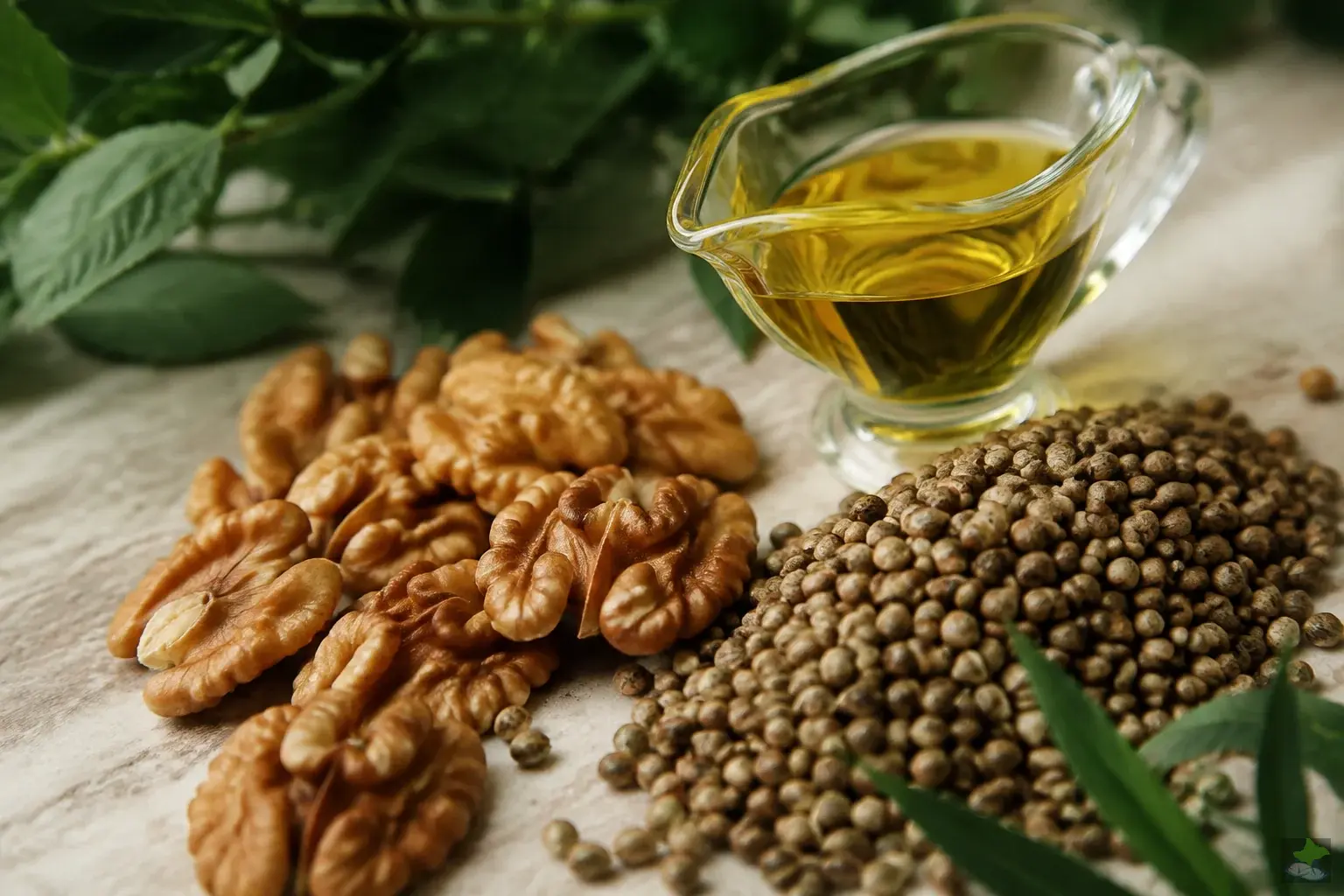
ALA-rich plant foods such as flaxseed, chia, walnuts and hemp oil make a valuable contribution to essential-fatty-acid intake.
They primarily supply the 18-carbon fatty acid ALA, which can be converted through elongation and desaturation into EPA and, less efficiently, DHA.
Conversion is limited and variable:
- Reported conversion of ALA to EPA is often around 5 to 10 percent, although estimates vary.
- Conversion to DHA is generally below 5 percent, and may be very low in some individuals.
High linoleic-acid intake can influence conversion pathways, but this does not mean that a universal intake of 2–3 g EPA/DHA is required or that ALA foods are inadequate. People who avoid fish may choose a verified algae product to obtain EPA/DHA directly.
Vegans and vegetarians can obtain ALA from seeds and nuts and consider algae-derived EPA/DHA according to dietary goals, life stage and professional guidance. Omnivores may obtain EPA/DHA from fish.
6. Evidence-Based Intake Recommendations
6.1 Focus on Adequacy, Not a Target Ratio
A practical strategy combines two principles:
- Choose Fats Deliberately: Choose a Varied Fat Profile:
- Use olive or rapeseed oil, nuts and seeds and avoid industrial trans fats. Sunflower, safflower and maize oils need not be categorically eliminated; quantity and dietary context matter. Ensure Omega-3 Intake:
Include ALA-rich plants and, according to dietary pattern, oily fish or a verified algae-derived EPA/DHA product.
6.2 Plant Sources as Valuable Components
Flax, chia, hemp and their oils provide essential ALA. Because conversion to DHA is limited, direct EPA/DHA can be considered for people who consume no fish, but requirements depend on individual context.
6.3 Supplements
Fish-oil and algae-oil supplements can provide EPA and DHA. Product quality, dose, oxidation control, medicines and clinical indication matter; neither source is automatically contaminant-free or necessary for everyone.
7. Relevance to Vida Vertical: Omega-3 Sources From Controlled Production
Controlled production offers specific possibilities, but standard hydroponic vegetables contain little long-chain omega-3 and specialised systems require technical and food-safety expertise:
1. Microalgae as Direct Sources of Long-Chain Omega-3 Nannochloropsis and Schizochytrium can be cultivated in dedicated systems for EPA- or DHA-rich biomass and oils. Food-grade production requires validated species and process controls; it does not automatically guarantee regionality, freedom from heavy metals or avoidance of all marine resources.
2. Microalgae in Dedicated Production Loops
Some microalgae use dissolved nutrients and produce oxygen, but integrating edible algae into fish-water loops is not automatically safe or technically optimal. Biomass intended as food or supplements requires separation where appropriate, contaminant monitoring, harvesting and processing.
3. Cultivating ALA-Rich Oilseeds
Flax and hemp can grow in controlled environments, but mature seed crops require substantial light, space and processing. Regional field cultivation is often more efficient. Light and mineral nutrition can influence composition, but short harvest-to-consumption intervals do not make seeds immune to oxidation.
4. Preventing Oxidative Degradation
Polyunsaturated fats require protection from heat, light and oxygen. Local production may shorten storage, but it does not eliminate oxidation. Correct packaging, cool storage and quality testing remain essential for oils and algae products.
8. Conclusion
Omega-3 and omega-6 fatty acids are essential partners in membranes and signalling, not opposing substances whose ratio alone determines systemic inflammation. Western dietary patterns may provide insufficient omega-3 in some populations, but linoleic acid itself is not established as a driver of chronic inflammation.
A sound strategy ensures ALA and, when appropriate, EPA/DHA while improving overall fat quality. It does not require eliminating omega-6-rich oils or aiming for one universal ratio. Limited conversion of ALA makes direct algae- or fish-derived EPA/DHA useful in some diets, not mandatory at high doses for everyone.
Dedicated microalgae systems and appropriately grown oilseeds may contribute sustainable fatty-acid sources. Their environmental value, safety and bioavailability depend on species, process, energy use and quality control rather than controlled cultivation alone.
Note: This article provides general scientific information and does not replace medical or dietetic advice. People with metabolic or cardiovascular disease or taking anticoagulants should discuss high-dose omega-3 supplements with a qualified clinician.
References:
- Simopoulos, A. P. (2016). An Increase in the Omega-6/Omega-3 Fatty Acid Ratio Increases the Risk for Obesity. Nutrients, 8(3), 128.
- Calder, P. C. (2016). Omega-3 fatty acids and inflammatory processes: from molecules to man. Biochemical Society Transactions, 44(5), 1107–1117.
- Brenna, J. T., et al. (2009). alpha-Linolenic acid update: 2009. American Journal of Clinical Nutrition, 90(3), 799S–805S.
- DiNicolantonio, J. J. & O’Keefe, J. H. (2018). Importance of maintaining a low omega-6/omega-3 ratio for reducing inflammation. Open Heart, 5(2), e000946.
- German Nutrition Society (DGE): D-A-CH reference values for nutrient intake. www.dge.de
- Swanson, D., Block, R. & Maki, K. C. (2012). Omega-3 fatty acids EPA and DHA: Health benefits throughout life. Advances in Nutrition, 3(1), 1–7.
Author: Uwe | Vida Vertical – Health
EXPLORE RELATED TOPICS
You may also be interested in
Macronutrients and Calorie Requirements
Physiological Foundations, Calculation Methods and Practical Application

Dietary Fibre
Biochemical Classification, Physiological Mechanisms and Preventive Relevance
Dietary Fats
Biochemical Classification, Physiological Functions and Evidence-Based Intake Recommendations