
CHAPTER 01 · 6 MIN READ
Dietary Fats
Biochemical Classification, Physiological Functions and Evidence-Based Intake Recommendations
Section: Health | Vida Vertical
Summary
Dietary fat was once portrayed broadly as a cause of weight gain and cardiovascular disease. Current nutritional science distinguishes amount, fatty-acid composition, food matrix and the diet as a whole. Fat provides essential fatty acids, supports cell membranes and signalling, and enables absorption of fat-soluble vitamins. This article explains saturated, monounsaturated and polyunsaturated fats, places omega-3 and omega-6 in context and offers practical intake guidance.
1. Introduction: Changing Perspectives in Lipid Research
Protein, carbohydrate and fat form the principal energy-yielding macronutrients. Fat provides approximately 9 kcal per gram, more than twice the energy of protein or carbohydrate at about 4 kcal per gram. Its high energy density made low-fat strategies popular, but it does not make all fat intrinsically harmful.
Adequate fat intake is physiologically important. Very low-fat diets can make it difficult to obtain essential fatty acids and absorb fat-soluble vitamins; effects on hormones and health depend on energy availability, overall diet, life stage and individual factors.
2. Physiological Functions of Fats
Fats perform many functions beyond supplying energy:
- Energy storage: Adipose tissue stores energy, cushions organs, provides insulation and acts as an endocrine tissue.
- Endocrine and signalling roles: Cholesterol and lipid-derived molecules participate in steroid-hormone and signalling pathways. Dietary fat is relevant, but hormone production is not determined by a single gram-per-kilogram threshold.
- Structural integrity: Cell membranes contain phospholipids and cholesterol. Fatty-acid composition affects membrane properties and signalling.
- Vitamin absorption: Dietary fat facilitates intestinal absorption of the fat-soluble vitamins A, D, E and K and carotenoids.
3. Biochemical Classification of Fatty Acids
Fatty acids differ by chain length, degree of saturation and position of double bonds. These features influence metabolism, oxidation and culinary properties.
3.1 Saturated Fatty Acids
Saturated fatty acids contain no carbon-carbon double bonds. They are generally more oxidation-resistant than polyunsaturated fats, but cooking suitability depends on the entire oil, refining, temperature and duration. Replacing part of saturated fat with unsaturated fat, especially polyunsaturated fat, generally improves LDL cholesterol and cardiovascular risk.
3.2 Monounsaturated Fatty Acids
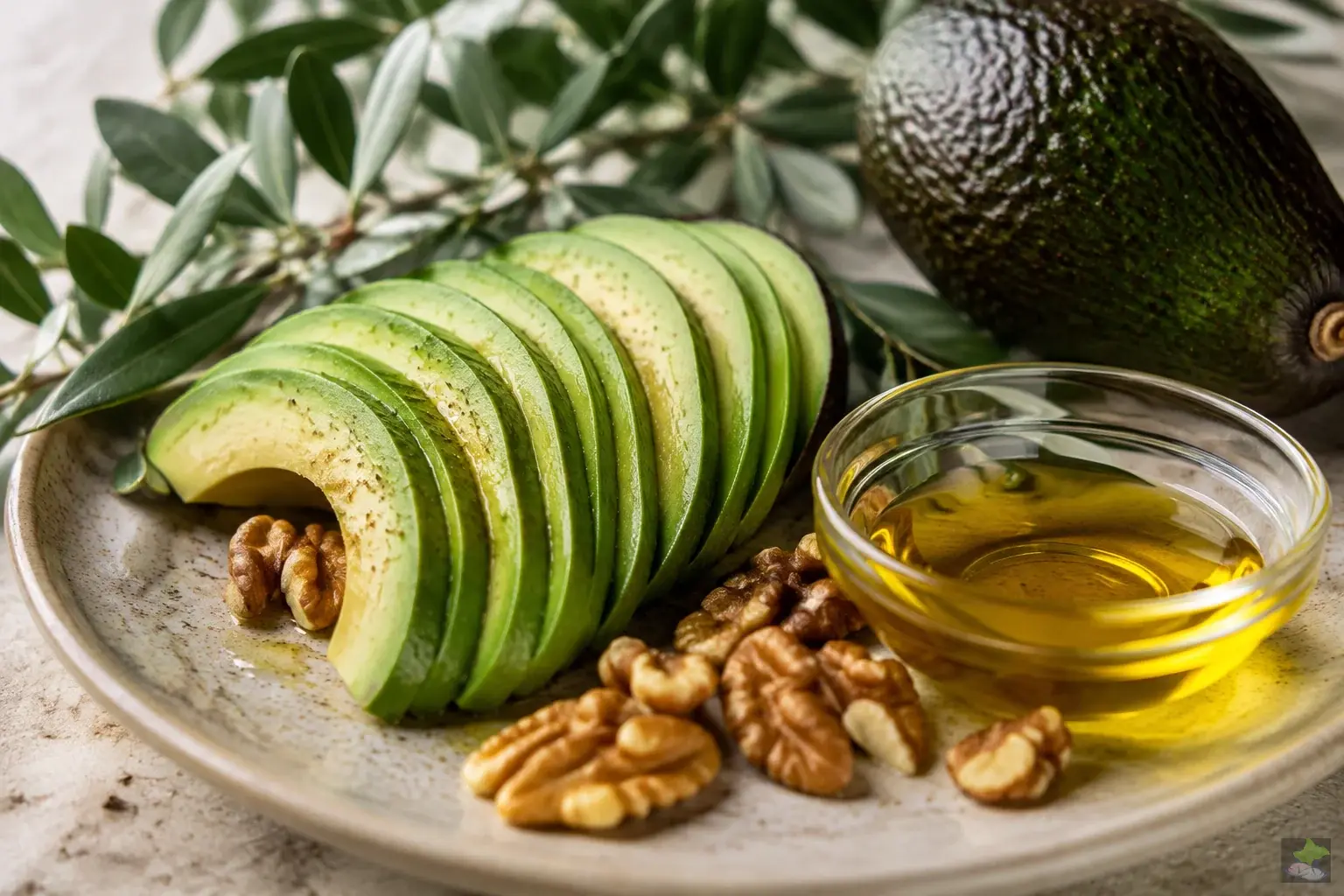
These contain one double bond. Olive oil, avocados and many nuts are major sources and can form part of cardioprotective dietary patterns.
3.3 Polyunsaturated Fatty Acids
These contain two or more double bonds. The group includes essential fatty acidsthat must be obtained from food: linoleic acid (omega-6) and alpha-linolenic acid (omega-3). Long-chain EPA and DHA can be obtained from fish or algae. Polyunsaturated oils are more oxidation-sensitive, but suitable products can still be used safely for many cooking methods.
4. Omega-3 and Omega-6 in Cell Signalling
Omega-3 and omega-6 fatty acids are incorporated into membranes and serve as precursors for numerous lipid mediators. Their effects are complex and cannot be reduced to omega-6 being “inflammatory” and omega-3 being “anti-inflammatory”. Both families have essential functions.
- Omega-6 fatty acids such as linoleic acid are essential and, within recommended intakes, are not shown to cause chronic inflammation. Replacing saturated fat with linoleic-acid-rich foods can lower LDL cholesterol.
- Omega-3 fatty acids include ALA from plants and EPA/DHA from aquatic sources. They contribute to cardiovascular, neural and visual function. Effects on insulin sensitivity, cortisol or cognition depend on population, dose and outcome and should not be generalised.
Western diets often provide more linoleic acid than ALA, EPA and DHA. The practical priority is to meet omega-3 recommendations and choose unsaturated fats in place of saturated and trans fats, not to pursue a fixed omega-6:omega-3 ratio. No universal target ratio is required for individual dietary planning.
Recommendations for EPA and DHA vary by authority, life stage and clinical indication. For healthy adults, guidance commonly focuses on regular oily fish or an equivalent algae-derived source rather than 1–3 grams daily for everyone. Higher therapeutic doses require professional oversight.
5. Evidence-Based Intake Recommendations
Fat intake should be considered as a proportion of energy and by fatty-acid quality rather than through unvalidated sex-specific minimums.
General adult guidance:
- A range of roughly 20–35% of total energy from fat is compatible with healthy diets, depending on the authority and individual context.
- Individual needs:
Energy requirements, medical conditions, pregnancy, sport and personal dietary patterns may justify individual adjustment.
- For athletes and active people:Ensure adequate total energy, essential fatty acids and fat-soluble vitamins rather than pursuing a universal grams-per-kilogram target.
Practical food-selection guidance:
- Limit saturated fat by favouring unsaturated oils; cooking stability depends on oil type and temperature, not merely saturation.
- Use olive oil, avocado, nuts and seeds as sources of unsaturated fats within meals.
- Include ALA sources such as flaxseed, chia, walnuts or rapeseed oil and, where appropriate, EPA/DHA from fish or algae. There is generally no need to eliminate omega-6-rich whole foods.
6. Relevance to Vida Vertical: Fats and Nutrient Absorption
Vertical growing systems mainly produce vegetables and herbs rather than dietary oils. Their clearest connection with fat is how meals combine fresh crops with suitable lipid sources:
1. Absorption of Fat-Soluble Compounds from Vertical CropsLeafy vegetables and microgreens can provide vitamin K1 and carotenoids such as beta-carotene. Adding a modest amount of fat—for example olive oil, nuts, seeds or an appropriate dressing—improves carotenoid absorption and supports absorption of fat-soluble vitamins. More fat is not automatically better.
2. Microalgae as the Original Aquatic Source of Long-Chain Omega-3EPA and DHA in aquatic food webs originate largely from microalgae. Quality-controlled algal oil can provide a vegan direct source. Cultivating edible microalgae is a separate, technically demanding food-production process requiring species control, hygiene and contaminant testing; it should not be improvised in an ordinary hydroponic or aquaponic loop.
7. Conclusion
Dietary fats are essential components of a healthy diet, supporting energy storage, membranes, signalling and absorption of fat-soluble compounds. Health effects depend on fatty-acid composition, food sources, replacement nutrients and overall dietary pattern—not simply on eating more or less fat.
Combining this knowledge with fresh, micronutrient-rich crops from controlled systems can support a varied diet. The benefit comes from the complete dietary pattern rather than a claim of cellular optimisation by one growing method.
Note: This article provides general information and does not replace individual medical or dietetic advice. Seek professional guidance for lipid disorders, cardiovascular disease, pregnancy, anticoagulant use or high-dose omega-3 supplementation.
References:
- Calder, P. C. (2016). Omega-3 fatty acids and inflammatory processes: from molecules to man. Biochemical Society Transactions, 44(5), 1107–1117.
- Simopoulos, A. P. (2016). An Increase in the Omega-6/Omega-3 Fatty Acid Ratio Increases the Risk for Obesity. Nutrients, 8(3), 128.
- German Nutrition Society (DGE): D-A-CH reference values for nutrient intake. www.dge.de
- DiNicolantonio, J. J. & O’Keefe, J. H. (2018). Importance of maintaining a low omega-6/omega-3 ratio for reducing inflammation. Open Heart, 5(2), e000946.
- Goyal, A., et al. (2014). Flax and flaxseed oil (Linum usitatissimum): a review by the Natural Standards Research Collaboration. Journal of Food Science and Technology, 51(9), 1633–1653.
Author: Uwe | Vida Vertical – Health
EXPLORE RELATED TOPICS
You may also be interested in
Macronutrients and Calorie Requirements
Physiological Foundations, Calculation Methods and Practical Application
Dietary Fibre
Biochemical Classification, Physiological Mechanisms and Preventive Relevance

Energy Balance and Macronutrient Distribution
Scientific Method for Calculating Individual Calorie Requirements