
CHAPTER 01 · 7 MIN READ
Cholesterol
Essential Physiological Roles, Lipoprotein Dynamics and the Influence of Plant-Based Diets on Cardiovascular Risk
Category: Health | Vida Vertical
Summary
Cholesterol is an essential lipid with structural and endocrine functions. Its physiological necessity does not make elevated atherogenic lipoproteins harmless: LDL and other apolipoprotein-B-containing particles play a causal role in atherosclerotic cardiovascular disease. This article explains cholesterol metabolism, distinguishes LDL from HDL and clarifies why dietary cholesterol does not translate linearly into blood cholesterol. It then examines particle retention, inflammation and other cardiovascular risk factors and considers how fibre-rich plant foods from any responsible production system can support a healthier lipid profile.
1. Introduction: From Scapegoat to Essential Molecule
For decades, dietary cholesterol was widely treated as a primary cause of cardiovascular disease, and people were often advised to avoid foods such as eggs and shellfish. Current guidance is more nuanced: dietary cholesterol responses vary, and overall dietary pattern—especially saturated-fat replacement—matters.
Cholesterol is not a toxic waste product but an essential sterol. At the same time, persistent exposure to elevated LDL and other apoB-containing particles increases atherosclerotic risk. Understanding its functions, transport and regulation resolves this apparent contradiction.
2. Biochemical Functions of Cholesterol
Cholesterol is a water-insoluble sterol present in animal cell membranes, where it helps regulate membrane properties. It also serves as a precursor for important molecules:
- Steroid Hormones: Cholesterol is the precursor of steroid hormones, including testosterone, oestrogens, progesterone and adrenal hormones such as cortisol.
- Bile Acids: The liver converts cholesterol into bile acids that support digestion and absorption of dietary fats and fat-soluble vitamins.
- Vitamin D: UV-B exposure can convert 7-dehydrocholesterol in the skin into vitamin D3, which contributes to calcium homeostasis and other physiological functions.
Most body cholesterol is synthesised endogenously, especially in the liver and intestine, while diet contributes a variable share. Animal-derived foods can contain cholesterol; unfortified plant foods do not.
3. Lipoproteins: Transport Particles in the Bloodstream
Because lipids are poorly soluble in blood, cholesterol travels in lipoprotein particles. Clinical risk assessment considers LDL cholesterol, non-HDL cholesterol, apolipoprotein B, triglycerides and the wider risk profile; two familiar fractions are:
3.1 LDL Cholesterol (Low-Density Lipoprotein)
LDL particles transport cholesterol to tissues. Persistently elevated concentrations increase the probability that apoB-containing particles enter and are retained in the arterial wall. LDL is therefore not merely a statistical risk marker conditional on other pathology; cumulative exposure is causal, while smoking, hypertension and diabetes further amplify risk.
3.2 HDL Cholesterol (High-Density Lipoprotein)
HDL participates in reverse cholesterol transport and other functions. Higher HDL cholesterol is often associated with lower risk, but simply raising HDL pharmacologically has not reliably reduced events. HDL is not a literal “waste disposal service”, and its concentration should not be used to cancel the risk of high LDL or apoB.
4. Dietary Cholesterol and Hepatic Regulation
Dietary cholesterol does not raise blood cholesterol in a simple one-to-one relationship. Absorption and endogenous synthesis are regulated, and responses differ between individuals.
When intake changes, the body can adjust synthesis, absorption and excretion, but compensation is incomplete and genetically variable. Many guidelines no longer set a universal 300-mg ceiling for healthy people; this does not mean unlimited intake is irrelevant. Eggs or shellfish can fit a healthy diet, while people with familial hypercholesterolaemia, diabetes or high LDL need individual advice and attention to the whole dietary pattern.
5. The Pathogenesis of Atherosclerosis
Atherosclerosis begins when apoB-containing lipoproteins enter and become retained in the arterial wall. Their modification and the ensuing immune response drive plaque development. Oxidative stress and endothelial dysfunction contribute, but do not replace LDL particle exposure as a central causal factor.
- Retention and Modification of Lipoproteins: LDL need not first become oxidised in the bloodstream to be harmful. Retained particles in the arterial intima undergo modifications and provoke macrophage uptake, foam-cell formation and plaque progression. Lower lifelong LDL exposure lowers risk.
- Endothelial Dysfunction and Inflammation: Smoking, hypertension, diabetes and other factors impair vascular function and promote inflammation. An assumed omega-6-to-omega-3 ratio should not be listed as an established equivalent cause; linoleic acid is not inherently pro-inflammatory.
A person with high LDL remains at increased cumulative risk even without obvious systemic inflammation. Conversely, a “moderate” LDL value does not eliminate risk when other factors are present. Prevention requires assessment of the complete risk profile.
6. Relevance to Vida Vertical: Supporting Cardiovascular Health With Plant Foods
Plant foods contain no cholesterol and can support cardiovascular health through fibre, unsaturated fats and a varied nutrient profile. These benefits derive from the foods and dietary substitutions, not uniquely from hydroponic or aquaponic cultivation:
1. Phytosterols and Cholesterol AbsorptionPhytosterols reduce intestinal cholesterol absorption when consumed in sufficient amounts. Nuts and seeds contribute modestly, while clinically meaningful LDL lowering is best documented for appropriately dosed fortified foods. Most microgreens should not be assumed to supply a therapeutic dose.
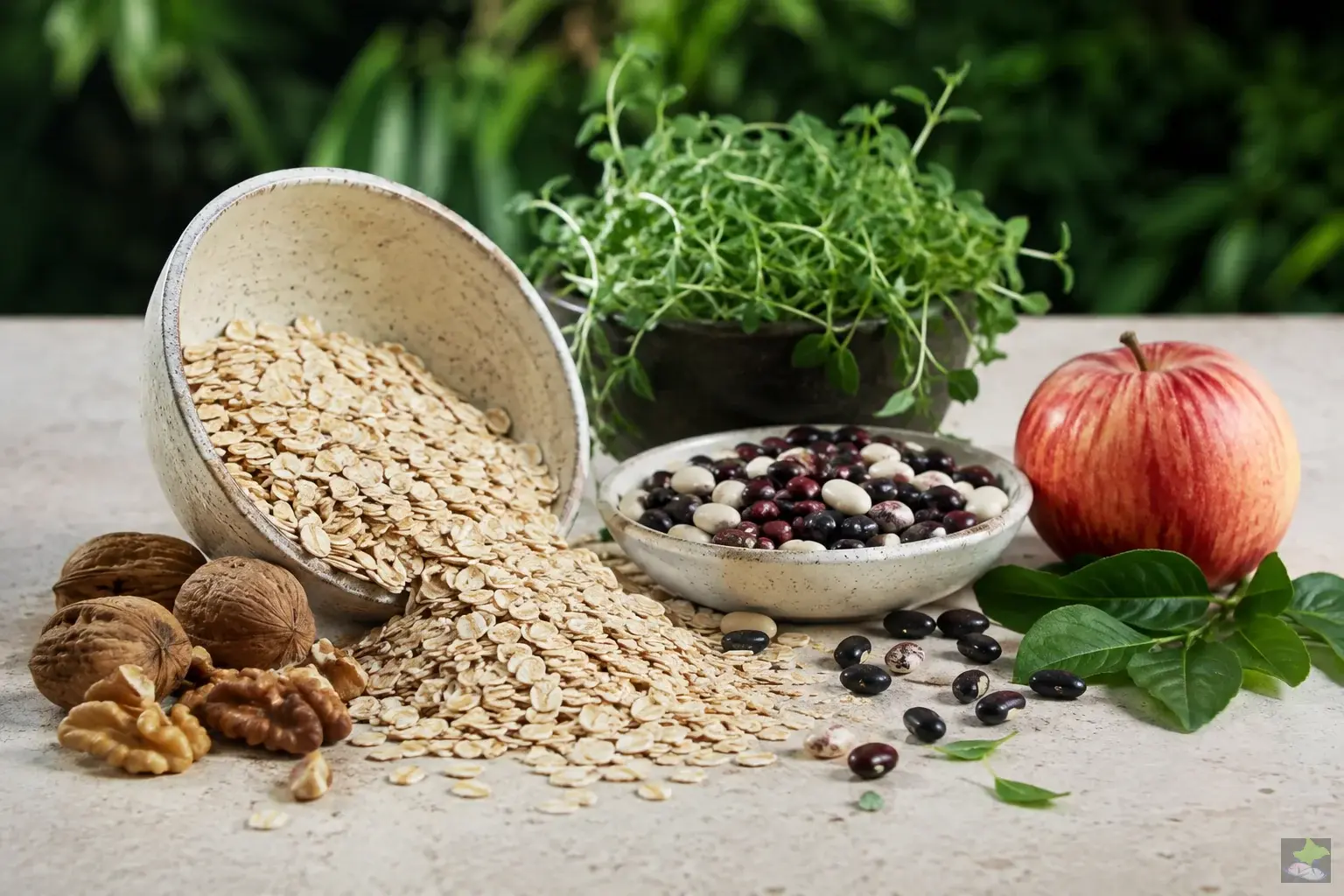
2. Soluble Fibre and Bile-Acid MetabolismViscous soluble fibres in foods such as oats, barley, pulses and some fruits can lower LDL by influencing bile-acid recycling and other mechanisms. Leafy greens and microgreens are nutritious but may not be particularly rich in the specific viscous fibres with the strongest evidence.
3. Antioxidant-Rich Foods Within an Overall PatternVegetables provide vitamin C, carotenoids and polyphenols, but these compounds do not circulate as a guaranteed shield that prevents LDL oxidation. Cardiovascular benefit is supported for dietary patterns rich in plant foods, whereas high-dose antioxidant supplements have not reliably prevented disease. Freshness can preserve some nutrients but hydroponics does not guarantee maximal concentrations.
4. Omega-3 Fatty AcidsFish and verified algae products can supply EPA and DHA. Pharmacological doses lower triglycerides, but effects on HDL are usually modest and outcomes depend on product and indication. Microalgae generally require dedicated food-grade production rather than simple integration into an aquaponic loop. Exercise and diet are valuable, but no single combination is the “most potent” universal stimulus.
7. Conclusion
Cholesterol is essential, yet elevated LDL and other apoB-containing particles causally contribute to atherosclerosis. Dietary cholesterol is not equivalent to blood cholesterol, and one egg is not the sole determinant of cardiovascular risk. Neither, however, should risk be reframed as only oxidative stress or inflammation.
The most effective strategy combines management of LDL or apoB, blood pressure, smoking, diabetes, physical activity and overall diet. Fibre-rich plants, nuts, seeds and unsaturated fats can help, whether grown in soil or controlled systems. People at high risk may also require evidence-based medication.
Note: This article provides general scientific information and does not replace cardiovascular assessment. Lipid disorders or familial hypercholesterolaemia require individual planning with a qualified clinician.
References:
- German Nutrition Society (DGE): D-A-CH reference values for nutrient intake. www.dge.de
- Steinberg, D. (2007). The cholesterol hypothesis revisited. New England Journal of Medicine, 356(15), 1589–1591.
- Libby, P., et al. (2011). Inflammation, immunity, and atherosclerosis. Circulation Research, 109(11), 1307–1319.
- Marangoni, F., et al. (2017). Dietary cholesterol and its relation to cardiovascular risk. Nutrition, Metabolism and Cardiovascular Diseases, 27(11), 971–979.
- Genser, B., et al. (2012). Plant sterols and cardiovascular disease. European Heart Journal, 33(8), 909–913.
Author: Uwe | Vida Vertical – Health
EXPLORE RELATED TOPICS
You may also be interested in
Macronutrients and Calorie Requirements
Physiological Foundations, Calculation Methods and Practical Application
Dietary Fibre
Biochemical Classification, Physiological Mechanisms and Preventive Relevance
Dietary Fats
Biochemical Classification, Physiological Functions and Evidence-Based Intake Recommendations