
Microgreen-Sorte
Dill Microgreens
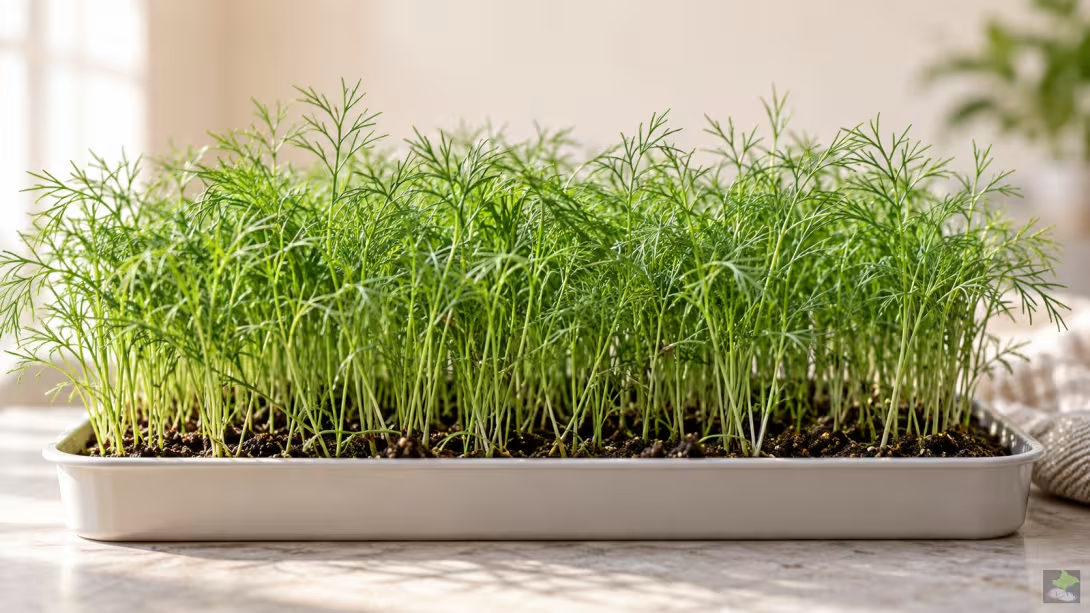
Dill microgreens are young Anethum graveolens shoots harvested above the growing medium. They belong to the carrot family and taste delicate, fresh and distinctly of dill.
Variety profile
- Botanical name: Anethum graveolens
- Typical growing time: 14–25 days
- Difficulty: demanding
- Flavour: delicate, fresh and distinctly dill-like
Seeds and preparation
Spread the elongated seeds thinly and press them down only lightly. Dense sowing restricts air exchange between the delicate shoots. Use only untreated, viable seeds intended for edible sprouts or microgreens. A small germination test before the main sowing saves space and reveals differences between lots.
Sowing and germination
A clean shallow tray with drainage and a separate catch tray simplify cultivation. Moisten the medium evenly without standing water. Distribute seeds closely but without overlapping. During covered germination, check odour, moisture and development daily.
Light, water and crop management
Dill grows slowly and delicately. Water from below, avoid strong direct airflow and harvest only once the shoots are sufficiently sturdy. Once the cotyledons are upright, provide bright, uniform light. Drain excess water and allow the surface to dry slightly between waterings.
Harvesting and use
Harvest with clean scissors just above the medium when the cotyledons are fully open and shoots are dry. Remove unused hulls and damaged plants. The shoots work particularly well with fish dishes, potatoes, cucumber and cold sauces. Add just before serving.
Putting nutrients into perspective
Dill microgreens are primarily an aromatic food; therapeutic claims are not part of this variety profile. Variety, seed lot, light, temperature, irrigation and harvest age affect composition. This information does not replace laboratory analysis or medical advice.
Hygiene and common problems
Dense, warm and humid crops can encourage plant diseases and undesirable microorganisms. Keep hands, trays and tools clean, use drinking-quality water only and do not consume suspect batches. Common problems include patchy germination, long pale stems, adhering hulls and mould. Change seeding density, airflow, light and moisture only gradually and document each adjustment.
Conclusion
Dill microgreens broaden the selection with a distinctive crop-specific flavour. Lot-specific germination tests, clean bottom watering and a documented harvest window enable reliable assessment.